AI in Customer Service: Complete Guide for Businesses (2026)

AI in Customer Service: Complete Guide for Businesses (2026)



Here is a number that should get your attention: 91% of customer service leaders say they are under executive pressure to implement AI. That statistic, from a Gartner survey of 321 leaders, captures the urgency that CX teams across industries are feeling right now. AI in customer service is no longer a future possibility. It is today's strategic priority, and the customer experience gains are too significant to ignore.
But urgency does not always come with clarity. For every success story about artificial intelligence in customer service, there is a cautionary tale about bots that frustrated customers, automated tools that sat unused, or implementations that never made it past the pilot phase. The gap between aspiration and execution is real, and poor service outcomes from rushed deployments have made some organizations hesitant.
This article cuts through the noise. Whether you lead a 100-seat contact center or manage 200,000 monthly customer interactions, here is what you need to know about what AI in customer service actually looks like today, why it works, where it falls short, and how to implement it the right way. We will cover the key aspects of customer service automation, the role of AI agents in modern support operations, and how to automate customer service tasks without sacrificing the human touch.
What Does AI in Customer Service Actually Look Like Today?
If your mental image of AI in customer service is a clunky chatbot asking "Did you mean..." for the third time, it is time for an update. The technology has matured significantly, and automated customer service now spans a broad spectrum of capabilities working together behind the scenes.
At the most familiar layer, conversational AI chatbots and virtual assistants handle routine inquiries across voice, chat, email, and messaging platforms. These automated systems use machine learning to improve over time, getting better at understanding customer queries with every interaction. But that is just the starting point. Natural language processing (NLP) enables these systems to understand not just what a customer is saying, but what they actually mean, parsing intent, context, and nuance in real time.
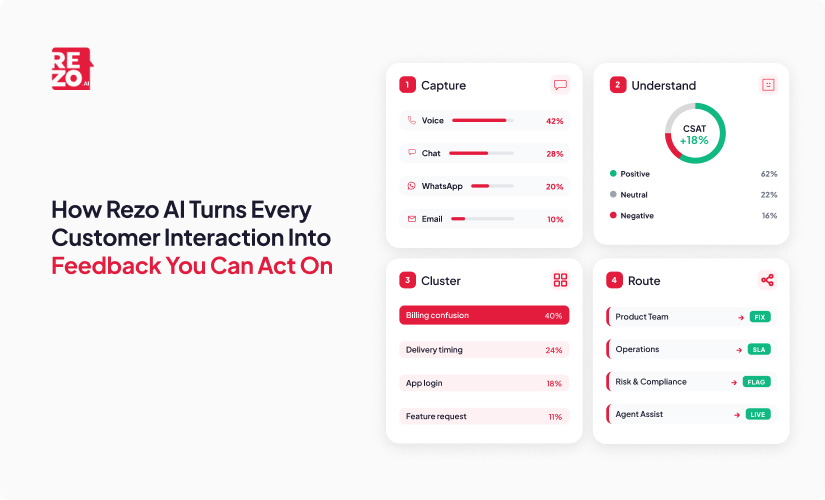
Then there is sentiment analysis. According to IBM, 70% of global customer service managers now use generative AI for customer sentiment analysis, detecting emotional cues in a customer's language to adjust responses, escalate when frustration spikes, or flag high-risk customer service interactions for human review. This ability to monitor customer feedback in real time represents a fundamental shift in how support teams address customer concerns.
Intelligent routing takes this further by matching customers to the best-suited support agents or AI workflow based on the nature of the issue, its urgency, and the customer's history. No more bouncing between departments. Interactive voice response (IVR) systems powered by AI now understand natural speech patterns, replacing the frustrating "press 1 for billing" menus of the past. Predictive and proactive customer support goes a step beyond by using predictive analytics to identify potential issues before the customer even picks up the phone, enabling preemptive outreach that turns a negative customer experience into a positive one.
Behind these front-facing tools, automated workflows handle the operational heavy lifting. Automated ticketing systems categorize, prioritize, and route customer requests without manual intervention. AI agents pull relevant information from a centralized knowledge base to deliver accurate responses in seconds. Self service portals allow customers to resolve common customer inquiries on their own, reducing the volume of inbound contacts that reach human agents.
And at the leading edge of this spectrum sits agentic AI, an emerging category that is reshaping what autonomous customer service can look like.

What Is Agentic AI and Why Does It Matter?
Traditional chatbots follow scripts. They handle simple, predictable customer queries well, but the moment a conversation goes off-script, they stall. Agentic AI is fundamentally different. These are AI agents that can autonomously plan, reason, and execute multi-step customer service tasks to resolve customer issues from start to finish, without needing human intervention at every turn.
Think of it this way: a standard chatbot can tell a customer their order status. An agentic AI agent can investigate a delayed shipment, identify the root cause, initiate a replacement, apply a discount, and send a follow-up confirmation, all in a single interaction. These AI agents handle complex tasks that previously required multiple handoffs between support agents and back-office teams.
Gartner predicts that agentic AI will autonomously resolve 80% of common customer service issues by 2029. That is not a marginal improvement. It is a structural shift in how contact centers operate, and it promises to transform customer support automation from a cost-saving measure into a genuine customer experience differentiator.
What makes this particularly compelling is McKinsey's framing of agentic AI as capable of "contextual empathy". By remembering past interactions, detecting emotional cues, and adapting its tone, AI agents can deliver experiences that feel personalized and genuinely responsive. Not human, but not robotic either. Something in between that actually works. These AI agents are capable of delivering personalized support at a scale that even the largest customer service teams could never match manually.
The Key Components of Automated Customer Service
Understanding what automated customer service actually involves helps businesses make smarter investment decisions. Customer service automation is not a single technology. It is an ecosystem of automated customer service tools and automated systems working in concert to address customer needs across every channel.
- AI-Powered Chatbots and Virtual Assistants. Modern virtual assistants go far beyond scripted FAQ bots. They use machine learning and natural language processing to understand context, remember customer preferences, and provide personalized service. The best virtual assistants can handle routine service tasks like order tracking, account updates, and appointment scheduling while knowing exactly when to escalate to human support.
- Automated Ticketing Systems. An automated ticketing system is the backbone of efficient customer service operations. These automated systems automatically categorize incoming customer requests, assign priority levels, and route tickets to the right support agents or AI agents based on issue type, customer tier, and agent technical expertise. Advanced automated ticketing systems can even suggest resolutions based on how similar customer inquiries were resolved in the past.
- Self Service Solutions. Self service tools empower customers to find answers without waiting for an agent. This includes self service portals with searchable knowledge base articles, AI-powered FAQ pages, and guided troubleshooting flows. Companies that invest in robust self service options report significant reductions in inbound contact volume and higher overall customer satisfaction, because customers who can quickly resolve simple issues on their own are happier customers.
- Automated Workflows and Process Automation. Behind every great customer service experience is a web of automated workflows that keep things running smoothly. From automated follow-up emails triggered by customer feedback to escalation rules that activate when customer sentiment drops, these automated workflows ensure that no customer request falls through the cracks. Customer support automation extends beyond the front line into back-office processes like refund approvals, account verifications, and compliance checks.
- Knowledge Base and Intelligent Search. A well-maintained knowledge base is the foundation that makes every other automated customer service tool more effective. AI agents draw from the knowledge base to deliver accurate responses. Support agents use it to quickly find solutions during live interactions. And self service portals depend on it to surface the right articles for customer queries. Machine learning continuously improves knowledge base relevance by analyzing which articles actually resolve customer issues.
When these components work together as an integrated system, automated customer service delivers a seamless customer experience that feels effortless for customers and efficient for support teams.
Why Are Businesses Investing Heavily in AI for Customer Service?
The short answer: because customer expectations have outpaced what traditional service models can deliver. According to Salesforce's State of Service report, 82% of service professionals say customer demands have increased. Customers want faster answers, 24/7 availability, personalized interactions, and seamless experiences across every channel. Meeting those customer needs without AI-powered customer support is becoming practically impossible at scale.
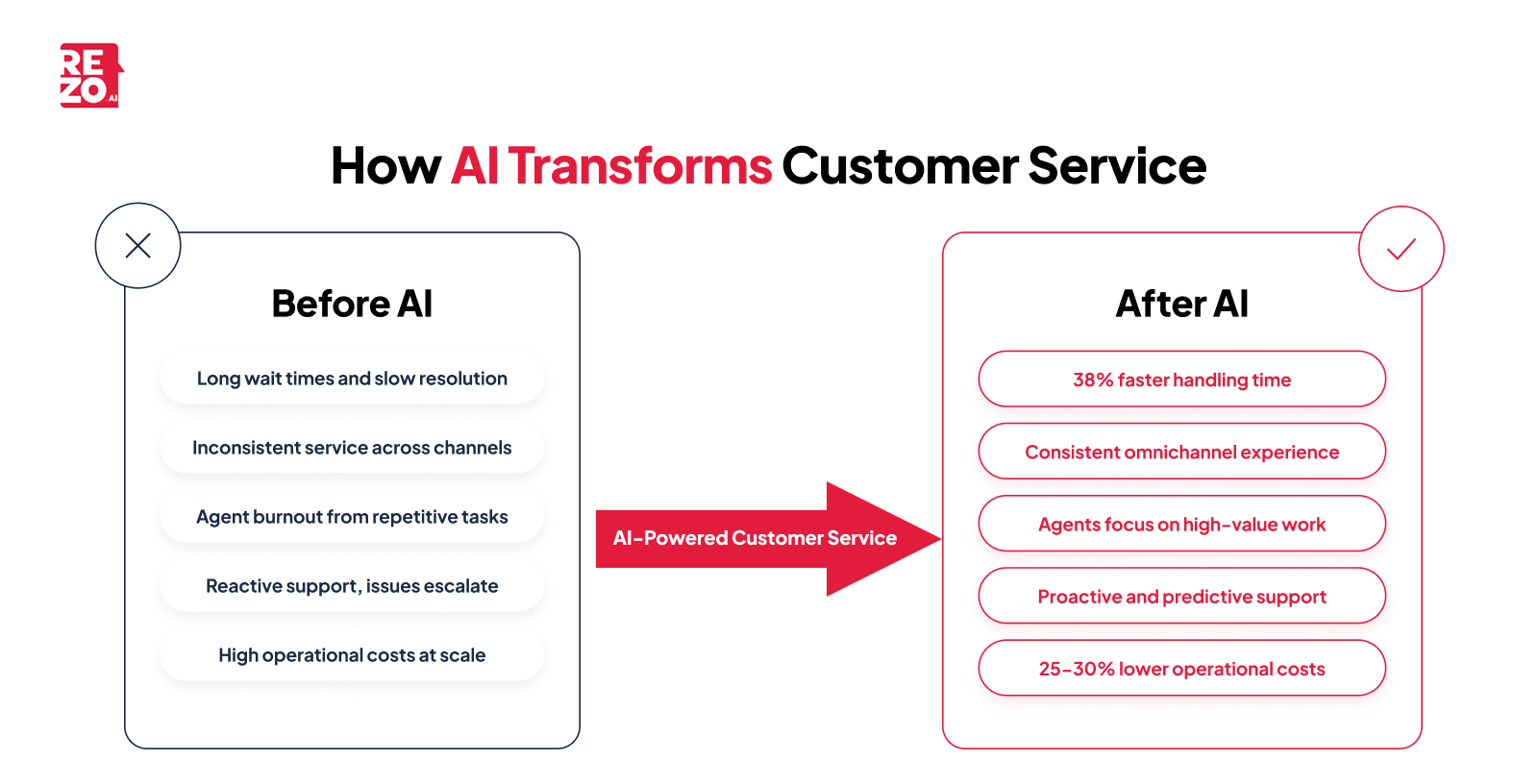
The data backs this up. Mature AI adopters report 38% lower average inbound call handling time and 17% higher customer satisfaction scores. Those are not marginal gains. For a contact center handling 150,000 customer interactions per month, a 38% reduction in handling time translates to thousands of recovered agent hours every single month. That kind of efficiency directly supports business growth while increasing customer satisfaction across the board.
But speed is only part of the story. AI enables hyper-personalization at scale, analyzing customer data, preferences, and behavior to deliver tailored customer service interactions across voice, chat, WhatsApp, and social channels. When a returning customer contacts customer support, AI ensures the agent (or the automated system itself) already knows their purchase history, past interactions, and preferred resolution style. That is the kind of omnichannel consistency that builds customer loyalty and strengthens customer relationships over time.
Perhaps most importantly, AI-powered customer service is not about replacing your agents. It is about empowering them. When customer service automation handles the routine, repetitive tasks that make up 60 to 70 percent of inbound volume, your human agents are freed to focus on complex issues and high-empathy interactions where they add the most value. Agent satisfaction goes up. Burnout goes down. Customer outcomes improve across the board. The result is great customer service delivered consistently, even during peak periods.
And when seasonal spikes hit, whether it is a product launch, a service outage, or the festive rush, customer service automation absorbs the surge without the scramble to hire and train temporary staff. Automated systems scale instantly, handling thousands of concurrent customer requests while maintaining service quality and consistent response times. This ability to automate customer service during high-volume periods is one of the most compelling reasons businesses invest in customer support automation.
Reducing operational costs is another significant driver. Businesses that automate customer service tasks report 25 to 30 percent lower support costs on average, with some achieving even greater savings. Those freed-up resources can be reinvested into customer service teams, training, and tools that improve the overall customer experience.

Need for Human Agents in Customer Service
Here is where the conversation gets honest. If AI could handle everything on its own, we would not be writing this article. The reality is more nuanced, and the data proves it.
Gartner predicts that 50% of companies that cut customer service staff due to AI will end up rehiring by 2027. That prediction is a powerful reality check. Organizations that treated AI as a headcount reduction tool rather than a capability multiplier are learning the hard way that you cannot automate customer service your way out of complexity. Great customer service still requires the human element.
The best outcomes come from pairing AI's speed and consistency with human empathy and judgment. McKinsey frames this as a role evolution: the customer service agent is shifting from "responder" to "adviser." Automated customer service handles the volume. Human agents handle the nuance, the escalations, and the relationship-building moments that drive long-term customer loyalty.
In practice, this means AI augments human agents with real-time coaching prompts, suggested responses, automated note-taking, and sentiment alerts that flag when a conversation needs a human touch. Support agents equipped with AI-powered assistance can resolve complex issues faster and with greater confidence. Customer service teams that embrace this hybrid model report higher agent retention rates and stronger customer satisfaction scores.
In industries like BFSI, where regulatory nuance is critical and customer service data must be handled with care, or automotive, where complex customer queries require deep product knowledge and technical expertise, human support is not optional. It is essential. AI agents handle the routine customer inquiries and data gathering, while human agents focus on the customer service interactions that demand empathy, creativity, and judgment.
Forrester's 2026 predictions make a related observation: the real work of making AI succeed in the contact center is "foundational" and "not glamorous." It requires investing in people alongside technology, training support teams for new roles, and building a culture where AI and humans collaborate rather than compete. The customer service experience suffers when either side of this equation is neglected.
What Challenges Should You Prepare For?
No technology is without its growing pains, and AI customer support is no exception. Being honest about the challenges is how you prepare for them. Successful customer service strategies account for these obstacles from the start.
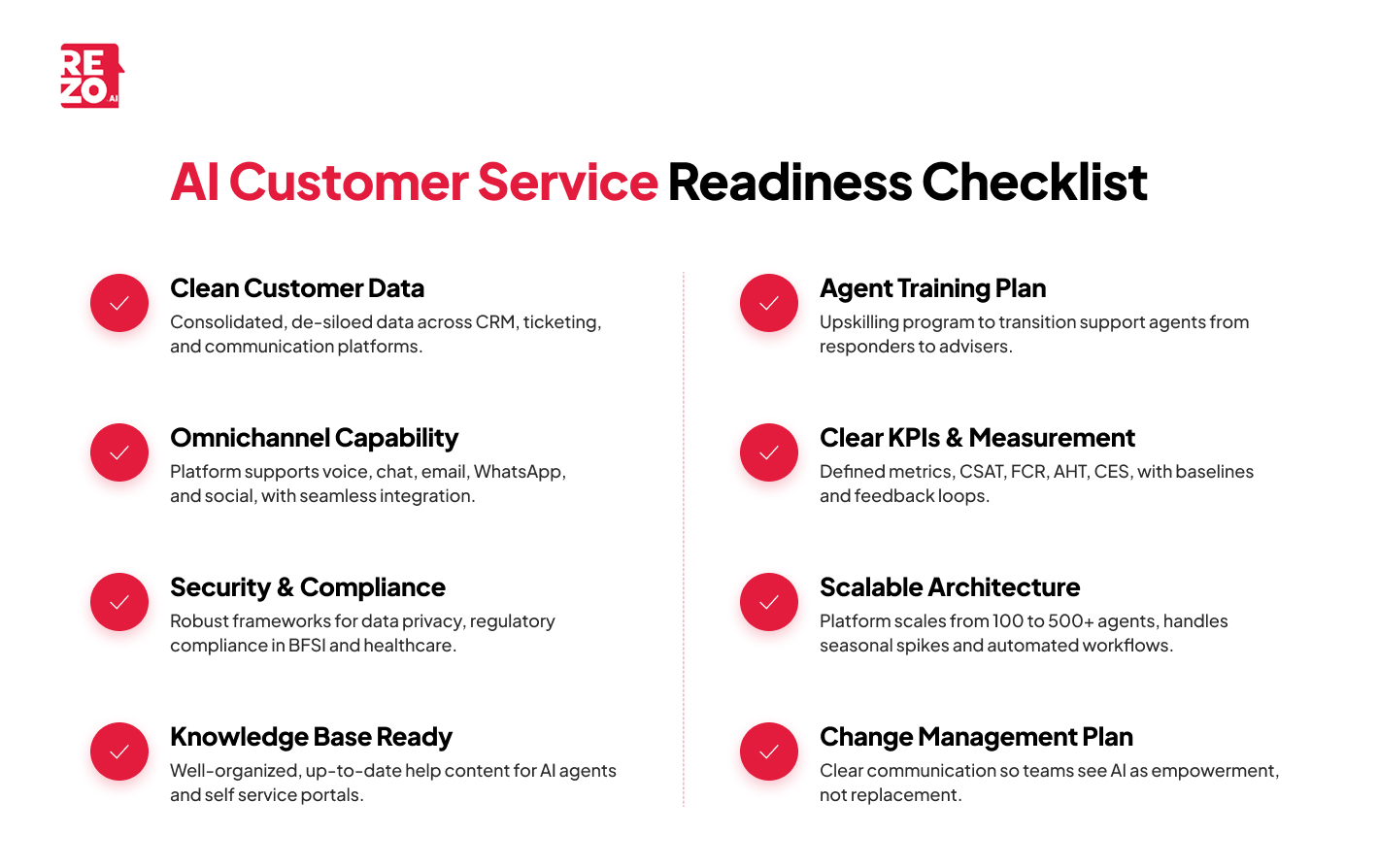
The trust gap is real. Customers want to know when they are talking to a bot, how their customer data is being used, and whether the AI is making fair decisions. Transparency and clear disclosure are not nice-to-haves. They are prerequisites for adoption. Organizations should use customer surveys and customer feedback loops to continuously gauge comfort levels and address customer concerns about automated systems.
Data quality makes or breaks AI. AI is only as good as the information it runs on. Siloed systems, inconsistent records, and poor data hygiene lead to inaccurate responses and frustrated customers. Deloitte's Contact Center Survey found that CX scores actually dropped when bots lacked contextual intelligence. The lesson is clear: deploy automated customer service tools that understand context, not just keywords. Clean customer service data is the fuel that powers every effective AI agent, knowledge base article, and automated workflow.
Privacy and compliance demand attention, especially in regulated industries like banking, insurance, and healthcare. Customer data handling requires robust security frameworks and adherence to evolving regulations. Any automated customer service work that involves sensitive information must meet strict governance standards, and customer service operations should include regular audits of how automated systems process and store customer data.
Change management is the hidden challenge. Getting support agents and customer service teams on board requires more than a training session. It requires clear communication about how AI makes their jobs better, not redundant. When support teams see automated customer service tools as instruments that eliminate drudgery rather than a threat to their livelihood, adoption accelerates. Organizations that neglect this step often see human intervention rates remain high because agents do not trust the automated systems to handle customer requests properly.
Each of these challenges is solvable. But they require planning, the right technology partner, and a phased approach to automate customer workflows responsibly.
How to Implement AI in Customer Service the Right Way
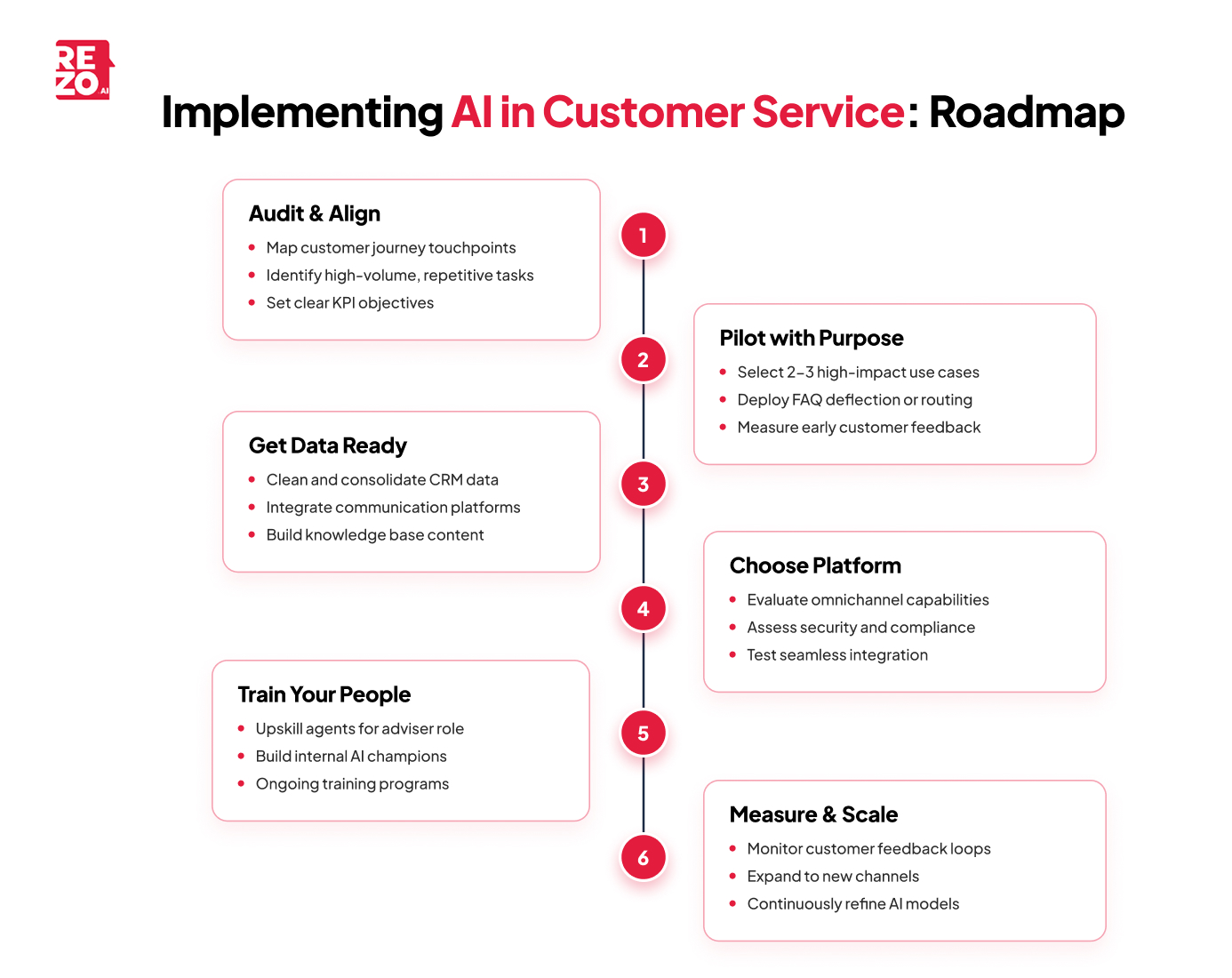
Implementation is where strategy meets reality. Here is a practical roadmap that works for enterprises across BFSI, e-commerce, telecom, and beyond. These customer service strategies have been validated across industries and scale levels.
Phase 1: Audit and Align.
Start by mapping your customer journey and identifying the highest-volume, most repetitive customer service tasks. Set clear objectives. Are you optimizing for first-call resolution? Reducing average handling time? Improving customer satisfaction? Your goals shape your technology choices. Audit your existing customer service operations, customer data quality, and support operations to establish a baseline before introducing automated customer service.
Phase 2: Pilot with Purpose.
Pick two to three high-impact use cases to test. FAQ deflection through self service tools, intelligent routing of customer queries, and automated ticketing system deployment are common starting points. Start small, prove value, and build internal confidence. Use customer feedback and customer surveys to measure early impact and identify areas where automated customer support is working well and where it needs improvement.
Phase 3: Get Your Data Ready.
Clean, consolidate, and integrate customer data across your CRM, ticketing system, and communication platforms. Build and organize your knowledge base so AI agents and automated systems have reliable information to draw from. This is the "not glamorous" foundational work that Forrester rightly emphasizes, and it is the single biggest predictor of success when you automate customer service processes.
Phase 4: Choose the Right Platform.
Look for enterprise-grade automated customer service tools that offer omnichannel customer support across voice, chat, and messaging, robust security and compliance capabilities, and seamless integration with your existing tech stack. Scalability matters. A platform that works for 100 support agents today should work for 500 tomorrow. Evaluate how well the platform supports customer support automation, AI agents, and automated workflows as an integrated system.
Phase 5: Train Your People.
Upskill your customer service agents for the "adviser" role. Build internal champions who understand both the technology and the customer needs it serves. Invest in ongoing training for support teams, not just a one-time onboarding. Every support agent should understand how to work alongside AI agents, when to allow human intervention, and how to use automated tools to deliver high quality customer service.
Phase 6: Measure and Scale.
Track customer satisfaction (CSAT), first-call resolution (FCR), average handling time (AHT), and customer effort score (CES). Monitor customer feedback continuously and use these insights to iterate, expand coverage to new channels and use cases, and continuously refine your AI models. Successful customer support automation programs also track service quality metrics, agent utilization, and the ratio of automated versus human-handled customer service interactions to ensure the right balance.
What Does the Future Hold for AI in Customer Service?
The trajectory is clear, and AI in customer service continues to evolve at a rapid pace. AI will be involved in a growing share of every customer interaction. IBM predicts AI will touch 100% of customer interactions within three years. But that does not mean humans disappear from the equation. It means AI becomes the foundation layer, with human expertise layered on top for the moments that truly matter.
The shift from reactive to proactive customer support will accelerate. AI agents will use predictive analytics to predict issues before customers report them, enabling preemptive outreach and turning potential complaints into moments of delight. Machine learning models will analyze customer data patterns, past interactions, and customer sentiment signals to anticipate customer needs before they are articulated. This is where automated customer service moves from being merely efficient to being genuinely valuable for building lasting customer relationships.
Hyper-personalization will become the baseline customer experience expectation, not a differentiator. Voice-first AI interactions will grow as conversational AI technology matures, with advanced virtual assistants becoming the primary interface for customer support across industries. Self service will expand in sophistication as AI agents power more intelligent self service portals, knowledge base search, and guided resolution flows.
The convergence of generative AI and agentic AI will create service experiences that feel natural, adaptive, and genuinely helpful. AI agents will handle increasingly complex tasks, from multi-step claims processing to personalized support recommendations based on a customer's complete service history. Automated customer service will become the norm rather than the exception, with automating routine tasks freeing entire customer service teams to focus on high-value, relationship-driven work that drives business growth.
The future of AI in customer service is not about choosing between humans and machines. It is about orchestrating the best of both to deliver great customer service at every touchpoint.
Closing Thought
The pressure to adopt AI in customer service is real, and it is not going away. But the businesses that will win are not the ones that rush to automate customer interactions across every channel overnight. They are the ones that use AI to make every human interaction more informed, more empathetic, and more effective, increasing customer satisfaction while empowering their customer service teams to do their best work.
Customer service refers to every touchpoint where your brand and your customer meet. Investing in customer service automation, AI agents, and the right automated customer service tools is how forward-thinking businesses ensure those touchpoints consistently deliver a great customer experience. Technology sets the pace. People set the standard. Together, they deliver high quality customer service that builds customer loyalty, drives business growth, and sets your brand apart.
Frequently Asked Questions
What does automated customer service refer to, and how does it work?
Automated customer service uses artificial intelligence, machine learning, and natural language processing to understand and respond to customer inquiries through various channels, such as chat, email, and voice. Automated customer service tools like AI-powered chatbots, automated ticketing systems, and self service portals handle routine customer requests at scale. By automating routine tasks, businesses can manage a high volume of customer interactions while freeing support agents to focus on complex issues that require human intervention.
Do customers prefer AI or human customer service?
Most customers still prefer human agents for complex issues. A 2026 Gartner survey found 64% of customers would rather companies not use AI for service. However, 46% accept AI for specific customer service tasks like order tracking, routing, and scheduling. The most effective customer service strategies use a hybrid approach where automated systems handle routine inquiries and human agents address customer needs that require empathy and judgment, boosting customer satisfaction for both simple and complex interactions.
How can businesses boost customer satisfaction with AI?
To boost customer satisfaction, businesses should focus on deploying AI that addresses customer needs quickly and accurately. This means investing in a robust knowledge base, training AI agents on real customer service data, and ensuring seamless integration between automated systems and human agents. Use customer feedback and customer surveys to continuously refine your approach. The goal is not to replace the customer service experience with automation but to enhance it, delivering personalized support, accurate responses, and faster resolution times that increase overall customer satisfaction.
Frequently Asked Questions (FAQs)


Take the leap towards innovation with Rezo.ai
Get started now