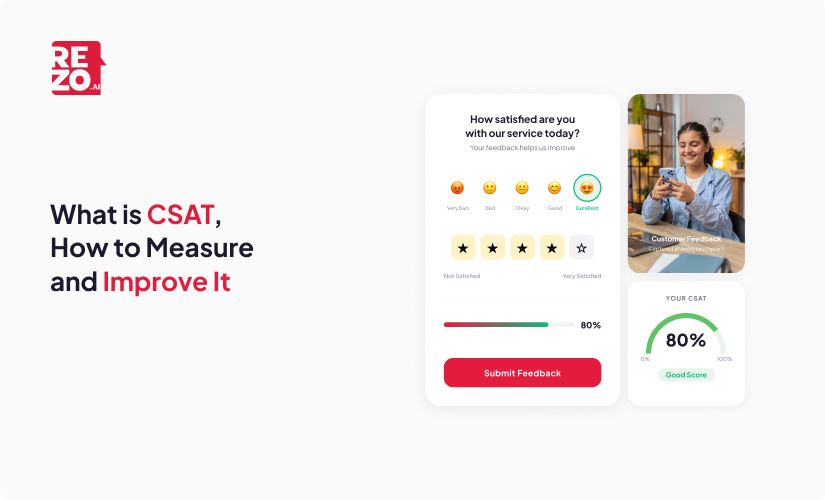
What is CSAT, How to Measure and Improve It

What is CSAT, How to Measure and Improve It


Have you ever wondered, while buying a certain thing you always recall a certain brand. This happens because of the satisfactory product and customer services delivered to you. To beat your competitors and grow revenue, it's important for any business to retain its loyal customers, deliver services that meet customer expectations, and make sure that your buyers are 100% satisfied and they become your biggest brand advocates. But the biggest challenge is how to ensure that your customers are happy and satisfied with your services? Here comes the concept of CSAT in customer service. CSAT, which stands for Customer Satisfaction, is a metric used to measure how satisfied customers are with your products or services. It involves asking customers specific CSAT survey questions to gauge their level of contentment and identify areas for improvement.
What is Customer Satisfaction Score (CSAT)?
The CSAT score, or Customer Satisfaction Score, is a customer experience metric that is used to track how satisfied your buyers are with the organisation's product, services or customer support interaction. At its core, customer satisfaction (CSAT) quantifies the degree to which customers are satisfied with a specific service, product, or experience, most often expressed as a numerical score collected through CSAT surveys. A score below 50% usually signals to unsatisfied customers, and requires immediate attention.
According to Forbes, organizations lose $338.5 billion per year globally due to bad customer service a figure that underscores why measuring customer satisfaction is critical for retention. In fact, 88% of organizations use CSAT as a performance indicator, making it the most popular metric among service teams to gauge customer satisfaction.
Now since we have a fair understanding of what is CSAT, it is important to understand the components affected by CSAT ratings. Brands and marketers use CSAT rating scores to establish a user's satisfaction level at specific interaction times, such as during a support ticket exchange, the moment of purchase, a phone conversation with customer service, or during the onboarding process.
Enhancing the customer satisfaction score in customer service is vital for companies in today's competitive business landscape. The CSAT rating measures how satisfied buyers are with their overall experience, products, and services provided by a company. It goes beyond just meeting customer expectations; it reflects their perception of the company's commitment to quality, value, and customer-centricity. Improving the CSAT rating directly impacts a company's reputation, customer loyalty, and bottom line. Therefore, companies that prioritize and invest in ways to improve customer satisfaction gain a significant competitive advantage in the market.
Why is It Important to Measure Customer Satisfaction Score?
After understanding what CSAT is, the question is how to measure customer satisfaction and why to measure it. Here are some reasons to illustrate the importance of CSAT in customer service.
Customer Feedback and Insights
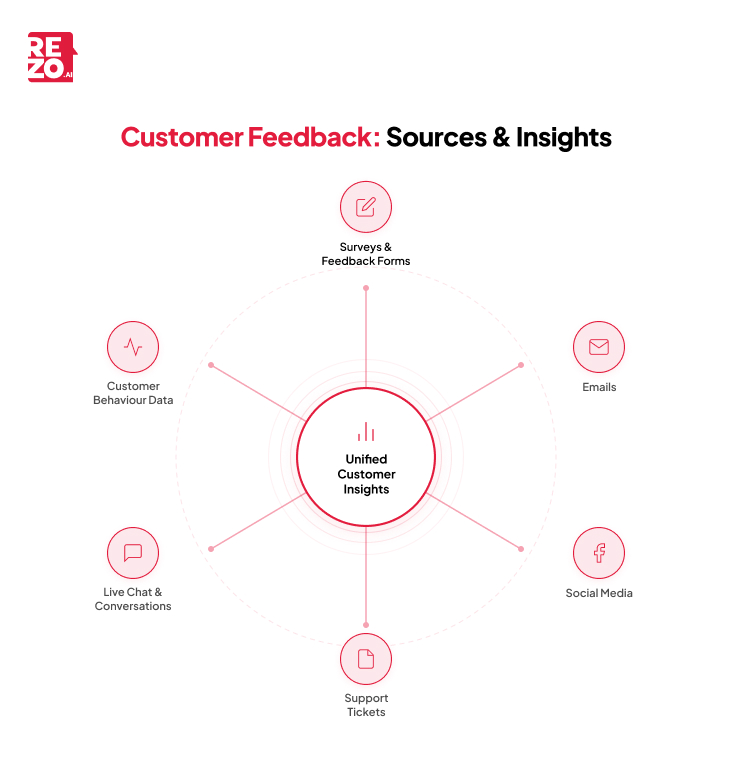
CSAT calculation allows companies to gather valuable feedback and insights. By asking buyers to rate their satisfaction levels, companies gain a deeper understanding of what aspects of their products, services, or interactions are working well and which areas need improvement. This input helps identify specific pain points, preferences, and expectations, enabling companies to make data-driven decisions to enhance their offerings and customer experience.
Performance Evaluation and Benchmarking
CSAT calculation provides a quantifiable metric for companies to evaluate their performance over time. By setting benchmarks and tracking CSAT ratings regularly, companies can assess their progress in meeting customer satisfaction goals. This evaluation helps identify trends, patterns, and areas of improvement, allowing companies to implement targeted strategies to enhance their overall performance and align it with what customers expect.
Customer-Centric Culture and Continuous Improvement
CSAT calculation fosters a customer-centric culture within an organization. When companies prioritize customer success, it becomes ingrained in their values, decision-making processes, and operations. Regularly measuring CSAT signals a commitment to continuous improvement and an ongoing effort to provide the best possible experience for customers. This customer-centric focus encourages employees at all levels to proactively identify areas for enhancement and contribute to overall satisfaction.
Competitive Advantage and Differentiation
In today's highly competitive marketplace, CSAT calculation provides a competitive advantage and differentiation for companies. By consistently delivering high customer satisfaction, companies can stand out from their competitors. Positive CSAT ratings and testimonials from happy customers serve as powerful marketing tools, attracting new customers and retaining existing ones. Additionally, publicly showcasing a good CSAT score can enhance a company's reputation, build trust, and establish itself as a preferred choice in the market, further strengthening its competitive position.
How to Measure CSAT?
CSAT scores are typically used to gauge how satisfied buyers are with a company's products, services, or interactions. Here's how to measure customer satisfaction scores of your audience-
1. Surveys and Feedback Forms
Companies can implement post-interaction CSAT surveys or feedback forms that customers fill out after engaging with their conversational AI solutions. These customer satisfaction surveys often include CSAT questions, asking respondents to rate their satisfaction on a numerical scale (e.g., 1 to 5) or providing open-ended feedback. In-app surveys and short follow-up questions at key touchpoints are especially effective for capturing direct feedback.
2. Net Promoter Score (NPS) Surveys
While CSAT captures satisfaction with a specific interaction and provides immediate feedback that is actionable for improving specific touchpoints, net promoter score (NPS) surveys measure customer loyalty and the likelihood to recommend a company's product or service on a scale of 1 to 10, offering insights into long-term customer loyalty and brand perception. Using both metrics alongside the customer effort score gives a broader picture of customer sentiment and the full customer journey.
3. Sentiment Analysis
The company can use natural language processing and sentiment analysis tools to analyze the text-based interactions between customers and the conversational AI. This can help gauge the sentiment of the conversations, whether they were positive, negative, or neutral, and flag unhappy customers before issues escalate.
4. Customer Feedback Analysis
Analyzing input received through various channels such as emails, social media, and support tickets can provide insights into satisfaction levels and highlight areas where service quality can be improved. Requesting customer feedback through well-placed mechanisms allows businesses to address complaints promptly, preventing customers from becoming detractors and improving overall satisfaction.
5. Customer Behaviour and Usage Patterns
Analyzing customer behaviour, such as the frequency of interactions, the duration of engagements, and the types of questions asked, can offer insights into satisfaction levels, which can then be incorporated into the CSAT formula. Higher engagement and positive interactions may indicate higher satisfaction.
6. Real-time Monitoring
Some conversational AI platforms offer real-time monitoring of customer interactions, including CSAT survey responses. Companies can proactively intervene or address issues when negative sentiment is detected, reducing the risk of customer churn.
7. Benchmarking:
Comparing CSAT scores over time and against industry benchmarks provides context and insights into overall satisfaction trends. A CSAT score above 75%–85% is generally considered a good CSAT score, while scores above 90% are considered exemplary. The average CSAT score across industries often hovers around 78%, which can serve as a useful reference point. CSAT scores can also help predict customer churn, as low scores often indicate a risk of customers leaving, while high scores suggest a strong likelihood of retention and repeat business.
8. Integration with CRM Systems
Integrating CSAT data with Customer Relationship Management (CRM) systems can help correlate satisfaction scores with customer profiles, purchase history, and other CRM data. Reviewing the CSAT score alongside customer history makes it easier to track patterns across the sales process.
9. Data Analytics Platforms
Leveraging data analytics platforms, the company can aggregate, visualize, and analyze CSAT data to identify trends, patterns, and correlations across customer satisfaction metrics.
10. Machine Learning and Predictive Analytics
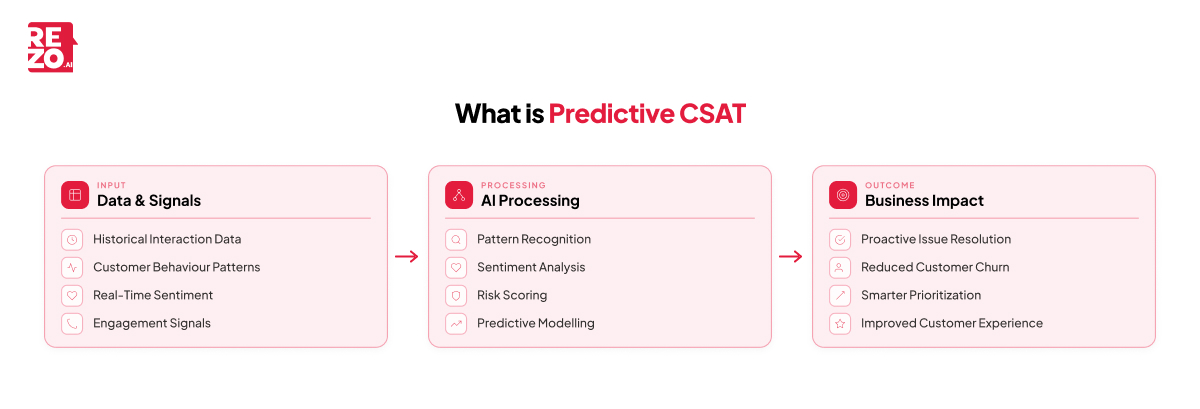
Using machine learning algorithms, the company can predict potential customer satisfaction issues based on historical data and proactively address them helping reduce customer churn before it happens.
Calculating CSAT Score using CSAT Formula
To calculate CSAT, divide the number of positive responses (satisfied buyers) by the total number of respondents, then multiply by 100:
CSAT Score = (Number of Positive Responses / Total Number of Responses) * 100
For example, if you received 150 survey results and 120 of them were positive:
CSAT Score = (120 / 150) * 100 = 80%
This means that your customer satisfaction (CSAT) score is 80%, indicating that 80% of respondents reported a positive satisfaction level. Against the average CSAT score of 78% across industries, a result like this sits comfortably in the "good" range.
It's important to note that the CSAT formula can be customized based on the scale used in your surveys (for example, a scale of 1 to 10), but the basic principle of calculating the ratio of positive responses to total responses remains the same.
Powerful Strategies to Boost Your CSAT
- Personalized Self-Service Options: Implement self-service options powered by automation, such as chatbots or voice bots, to complement your human agents. These tools can provide personalized assistance to buyers, addressing their queries and guiding them through common processes. By offering efficient and accurate self-service options that align with the CSAT formula, users can quickly find the information they need, leading to improved satisfaction and reduced customer effort.
Also Read: Hyper-personalisation with Agentic AI - Proactive Customer Engagement: Leverage automation to engage with buyers proactively. For example, automated notifications or personalized emails can be sent to provide updates on orders, service requests, or relevant information including beyond standard business hours. Proactive customer service, where businesses reach out to customers before they need assistance, can significantly improve customer satisfaction scores by reducing inbound calls and enhancing customer experience. Proactive communication, combined with gathering feedback through CSAT surveys, shows customers that the company values their time and keeps them informed, leading to a positive experience and increased satisfaction. In fact, setting realistic expectations and then under-promising and over-delivering is one of the simplest ways to create happy customers and improve customer satisfaction.
- Omnichannel Support: Implement automation tools that enable seamless interactions across multiple channels. Buyers should have the flexibility to engage with the company through their preferred communication channels, such as web chat, social media, email, or phone. Automation can help consolidate and synchronize data across these channels, allowing agents to have a holistic view of the customer journey and deliver consistent, personalized support.
Also Read: Omnichannel Customer Support Guide - Smart Routing and Prioritization: Use the Smart Routing Engine to intelligently route customer inquiries or issues to the most appropriate resources, all while considering the CSAT formula. AI-powered algorithms can analyze user data, categorize queries, and route them to the most qualified agent or team reducing response time. This ensures faster resolution times, reduces frustration, and increases CSAT by providing efficient and tailored support.
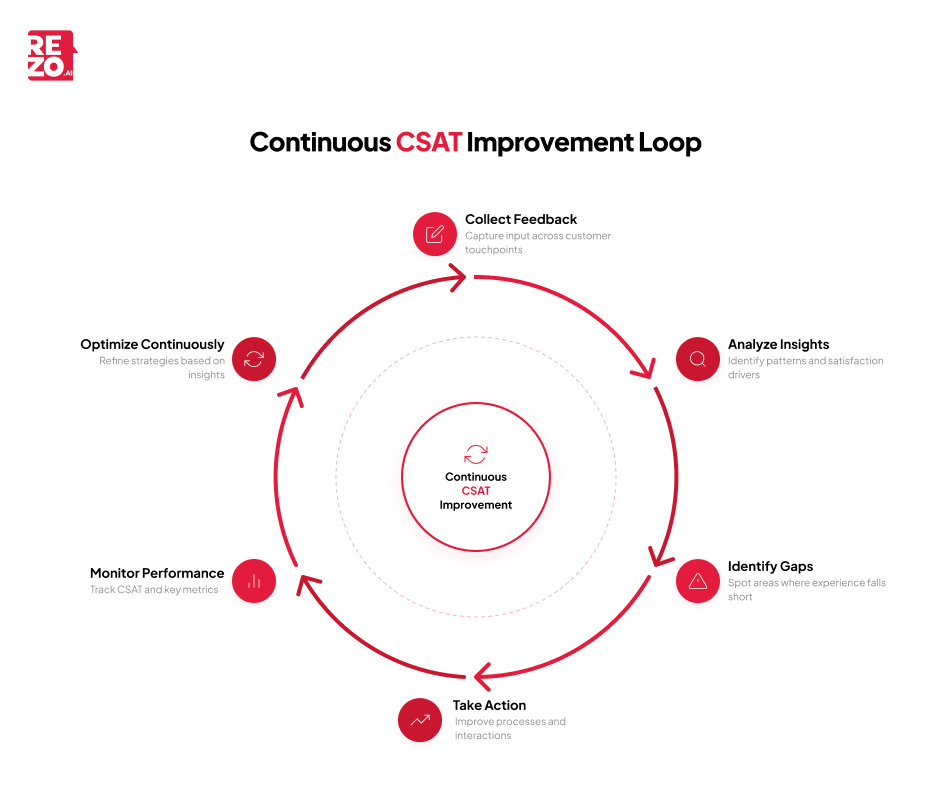
- Feedback Collection and Analysis: Leverage our Voice AI agents for the collection and analysis of CSAT feedback. Implement satisfaction surveys or feedback forms at key touchpoints in the customer journey. Automation tools can gather and analyze this data, identifying trends, patterns, and areas for improvement. This valuable input enables companies to make data-driven decisions, proactively address concerns, and continuously enhance their CX strategy which in turn drives repeat purchases and repeat business.
- Continuous Improvement through Data Insights: Utilize automation to extract actionable insights from customer data. Analyze CSAT scores, interactions, and feedback to identify pain points and areas for improvement. Empowering customer service teams with the right tools and training leads to more efficient issue resolution, which directly correlates with higher customer satisfaction scores and great customer service.
- Personalized Recommendations and Upselling: Leverage automation to provide personalized recommendations and upselling opportunities. By analyzing purchase history and behavior, automation can suggest relevant products or services that align with preferences and needs. This personalized approach enhances the customer experience, increases engagement, and can lead to higher CSAT scores.
- Customer Sentiments and Tone Analysis: Get valuable insights into customer emotions, preferences, and experiences through our powerful Sentiments and Tone Analyzer, all while focusing on CSAT in customer service. This tool can easily detect the customer's intent and take action accordingly. This personalized and empathetic approach not only resolves problems but also creates positive customer experiences that lead to high CSAT scores and long-term customer loyalty.
Also Read: Voice of Customer Analysis
.jpg)
Leverage Rezo's AI Agents to Increase Your CSAT
Rezo's automation and analytics products improve CSAT and help companies build a strong and positive reputation. Measuring customer satisfaction is essential for retention, as businesses that do not track CSAT risk losing customers faster than they can acquire new ones, impacting long-term growth. Higher customer satisfaction scores are correlated with increased customer loyalty, meaning satisfied customers are more likely to return and make repeat purchases, which is crucial for retention. Efficient ticket management and automated responses enable organisations to handle queries on time and provide quick, correct resolution. Incorporating sentiment and tone analysis into support teams' workflows enables companies to move beyond addressing technical issues and engage with buyers on an emotional level. Our benchmarks serve as measurable targets and guide the company's efforts toward enhancing customer satisfaction, strengthening team's performance, and reducing customer churn over time.

Frequently Asked Questions
Does CSAT contribute to improving customer loyalty?
A higher CSAT indicates that customers feel valued and cared for, which increases the likelihood of repeat interactions with the brand, thereby strengthening customer loyalty.
How do you extract actionable insights from CSAT data?
The most effective way to analyze CSAT data is to combine quantitative scores with qualitative feedback. Track trends over time, segment data by touchpoints or customer groups, and identify recurring issues or patterns. This helps turn raw feedback into actionable insights that can improve customer experience and satisfaction.
Frequently Asked Questions (FAQs)


Take the leap towards innovation with Rezo.ai
Get started now