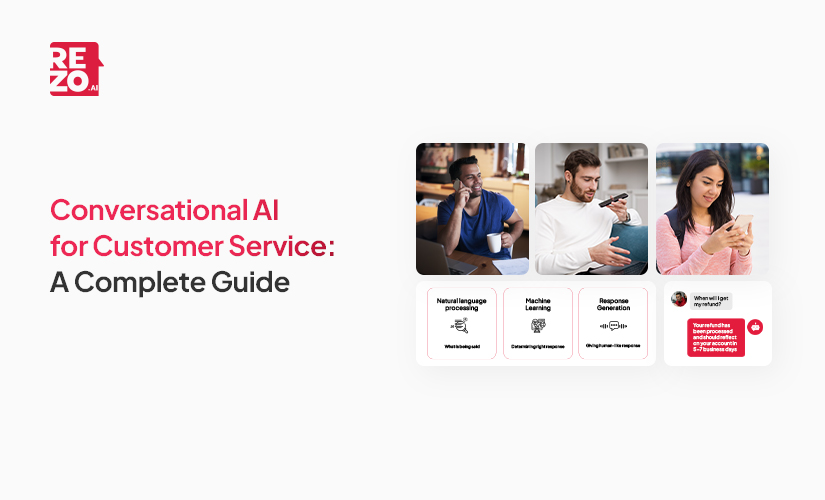
Conversational AI for Customer Service: A Complete Guide

Conversational AI for Customer Service: A Complete Guide



Here is a number worth sitting with: 85% of customer service leaders are exploring or piloting conversational GenAI solutions, according to Gartner. That is not a fringe experiment. That is a mainstream shift in how organizations approach the customer experience.
And yet, most businesses are still running on rigid, rule-based chatbots that follow scripted decision trees. You know the ones. "I'm sorry, I didn't understand that. Please choose from the following options." Customers hate them. Human agents end up handling the overflow anyway. Everyone loses.
Conversational AI for customer service is not another chatbot upgrade. It represents a fundamentally different approach to how businesses communicate with customers across voice and digital channels. Unlike traditional AI powered chatbots that break when customers go off-script, conversational AI technology understands context, learns from every customer interaction, and improves over time.
This guide covers what conversational AI for customer service actually is, how conversational AI works across communication channels, why it matters more now than ever, and how to implement it the right way in your contact center.
What Is Conversational AI for Customer Service?
At its core, conversational AI refers to AI systems that understand, process, and respond to human language naturally across both voice and text channels. Think of it as the intelligence layer that makes customer service interactions feel less like navigating a phone menu and more like having a human conversation with someone who actually knows what you need. The goal is to replicate the ease of a human conversation at machine scale.
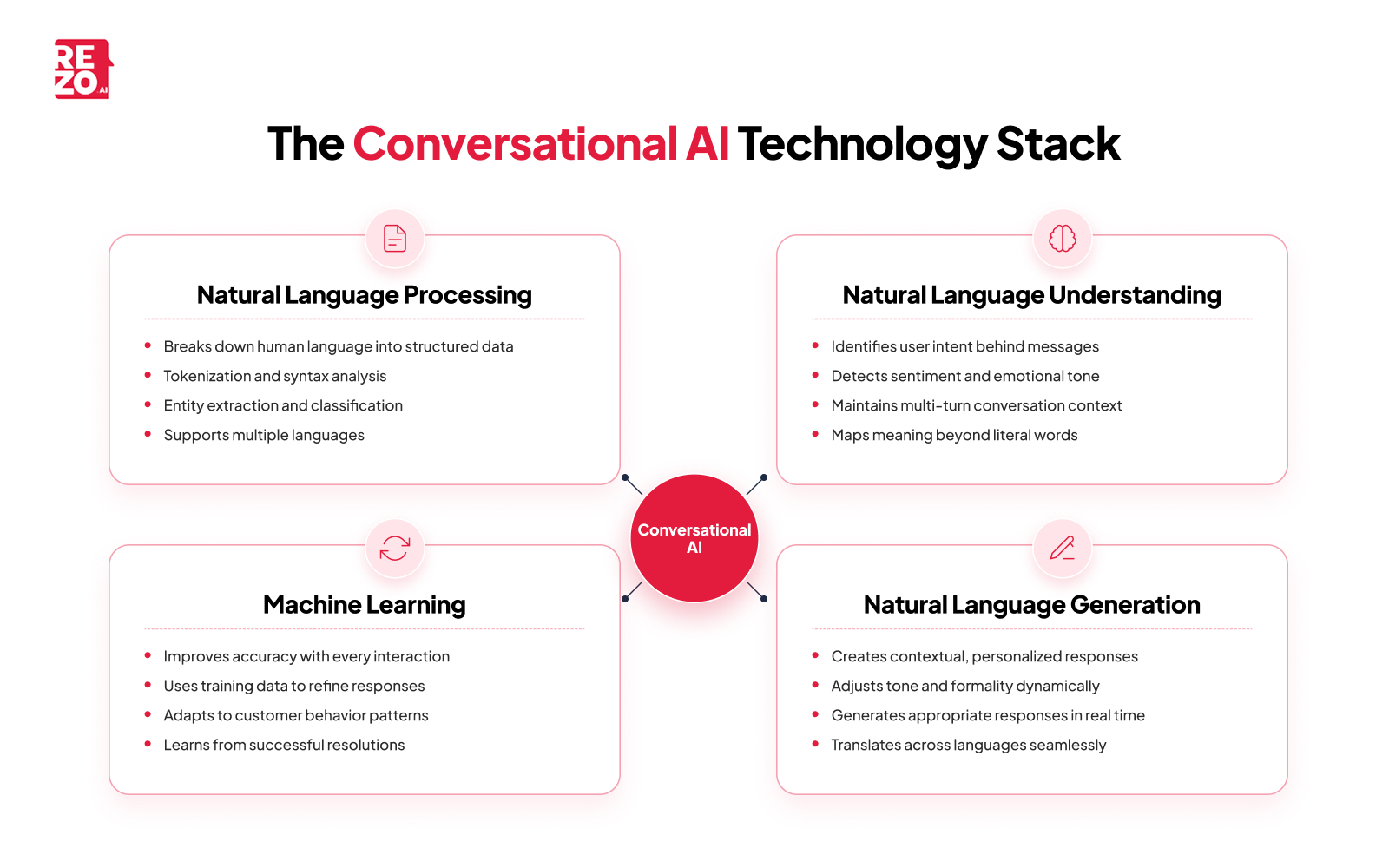
Conversational artificial intelligence combines several AI technologies into a unified system. The technology stack includes natural language processing (NLP), natural language understanding (NLU), natural language generation, machine learning, speech recognition, and increasingly, large language models (LLMs). These components work together so the system can interpret what a customer means, not just what they literally say, and generate an appropriate response.
This is where the difference from traditional chatbots becomes clear. A rule-based chatbot follows a script. If the customer goes off-script, it breaks. Conversational AI, on the other hand, can understand customer intent and context, learns from every interaction, and handles complex, multi-turn natural language conversations without falling apart. Modern conversational AI chatbots can analyze customer messages, detect sentiment, and adapt their tone to match the situation.
One dimension that often gets overlooked is voice. Conversational AI does not just power text chatbots. It drives intelligent voice assistants and virtual agents that handle thousands of calls daily in contact centers. For enterprises managing large call volumes across many languages, voice AI is not a nice-to-have. It is essential for delivering exceptional customer service at scale.
How Conversational AI Technology Works?
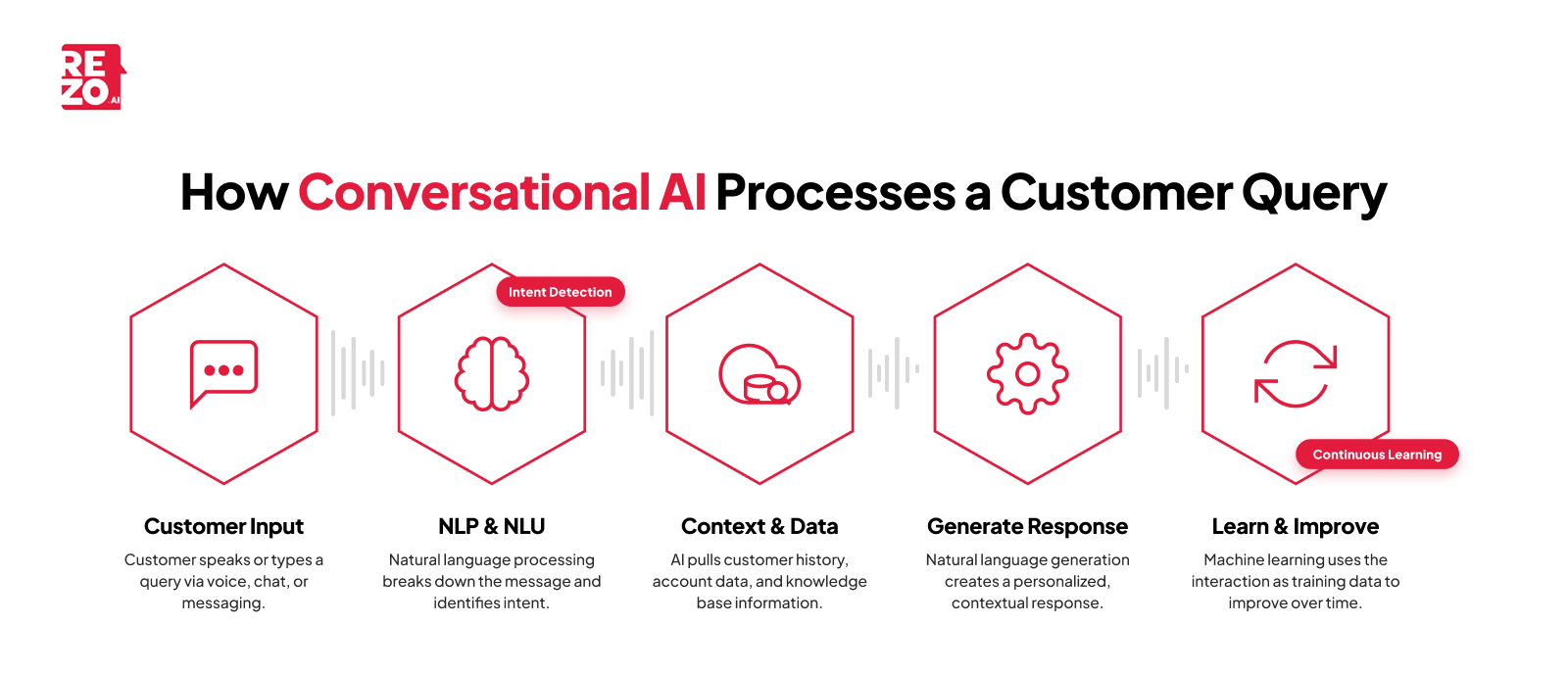
Understanding how conversational AI works requires looking at the core components that power every customer conversation. The process begins when a customer submits a query through any communication channel, whether voice, chat, email, or messaging.
Natural language processing breaks down human language into structured data. Natural language understanding then goes deeper, identifying the user's intent, extracting key entities, and understanding context from previous exchanges. This ability to understand customer intent across multi-turn natural language conversations is what separates conversational AI from simple keyword-matching chatbots.
Machine learning enables the system to improve continuously. Every customer interaction becomes training data that helps it better understand human language patterns, customer preferences, and customer behavior. Over time, the conversational AI solution learns which responses resolve customer inquiries most effectively and which approaches lead to higher customer satisfaction. The quality of training data directly impacts performance, so organizations need clean datasets that reflect the full range of customer queries and customer requests their system will encounter, including interactions in various languages.
Once the system understands the user's intent, natural language generation creates a contextually appropriate response. Unlike scripted chatbots, conversational AI generates personalized responses based on conversation history and context. The best conversational AI tools can translate human conversations across languages, adjust formality levels, and match the emotional tone of the customer in real time. This is what makes customer conversations feel natural rather than robotic.
Why Does Conversational AI Matter for Customer Service Now?
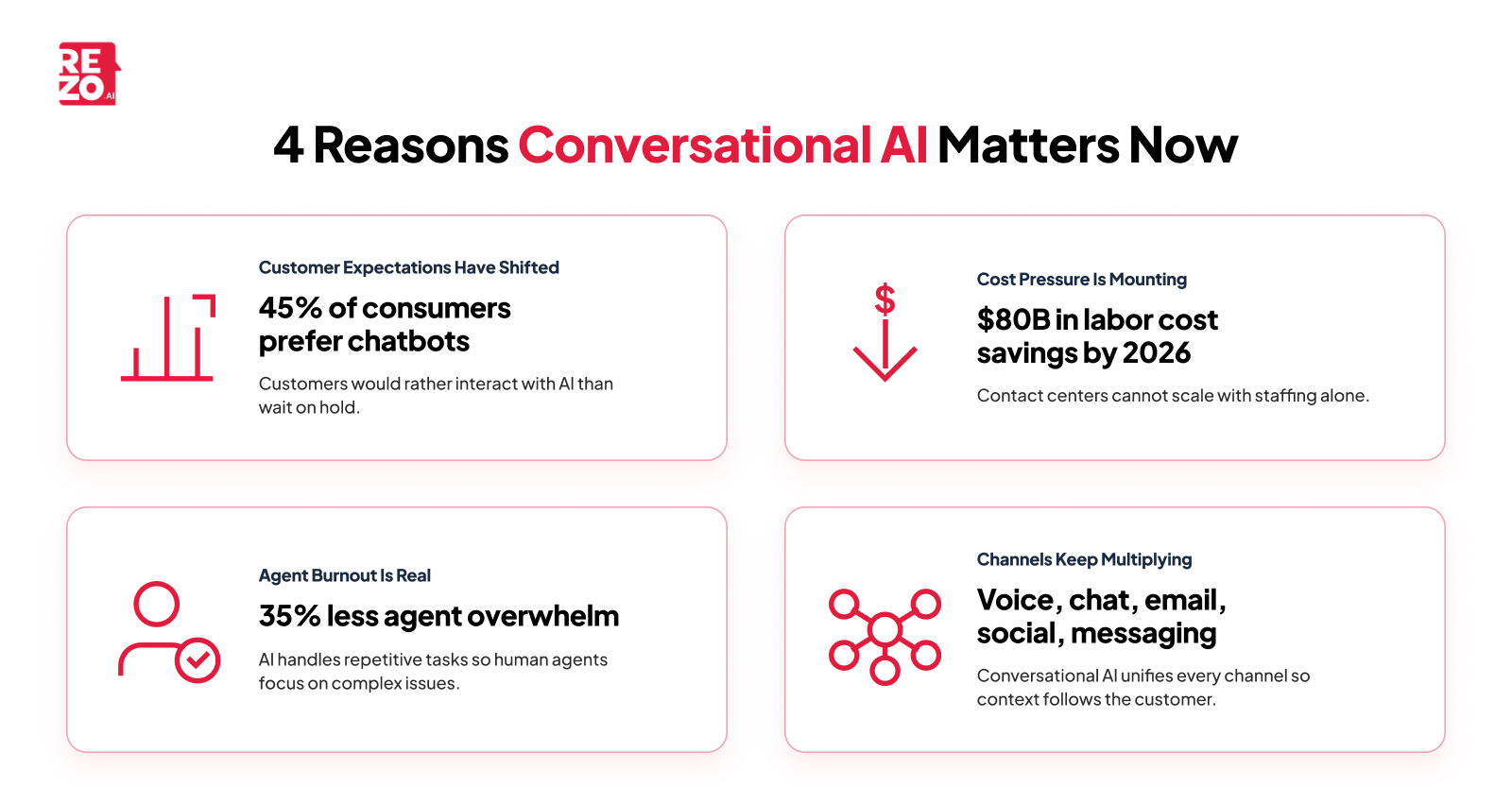
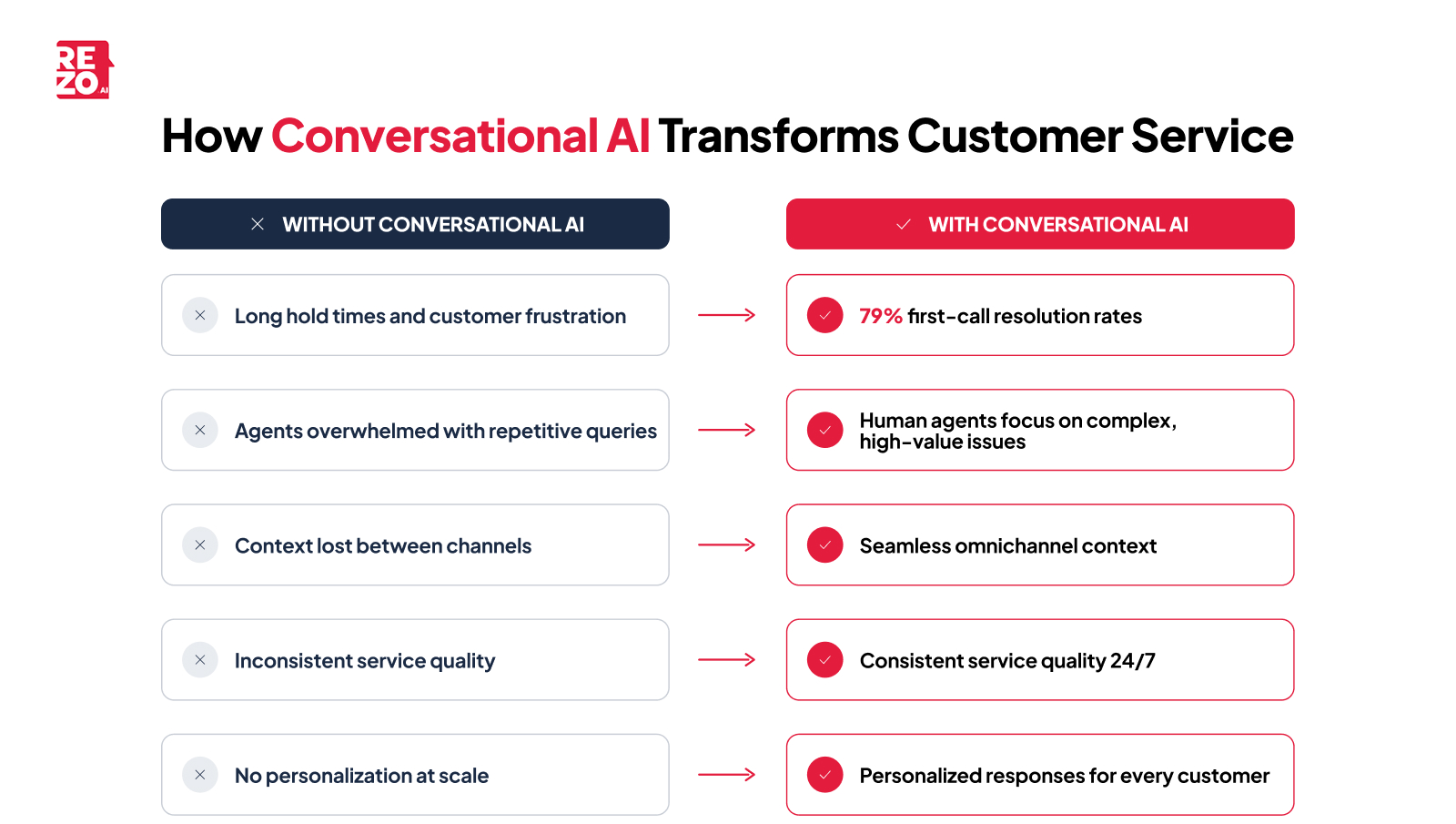
Customer expectations have shifted permanently. A survey found that 45% of consumers now prefer chatbots as their primary communication mode for customer service. That is not a niche preference. It reflects a generation of customers who would rather type or speak to an AI than wait on hold for a customer service agent.
The volume challenge makes this urgent. Contact centers are handling more customer interactions across more channels than ever. Staffing alone cannot keep pace, and most customer service operations are already stretched thin. This is not incremental. It is a structural shift in how customer service operations run.
The impact is especially pronounced in high-volume industries. McKinsey estimates that generative AI could reduce human-serviced contacts by up to 50% in banking, telecom, and utilities. Millions of routine customer queries, from balance checks to plan changes to order tracking, follow predictable patterns that AI handles efficiently, freeing human agents to focus on complex customer queries that require empathy and judgment.
But this is not just about deflecting volume. It is about the humans behind the headsets. Companies using generative AI in customer service are 35% less likely to report that agents feel overwhelmed during calls, according to Deloitte. When conversational AI handles repetitive tasks and routine customer queries, your customer service team focuses on the complex issues where human judgment truly matters.
Then there is the consistency problem. Customers move between communication channels constantly. They start on chat, switch to a phone call, follow up over email. Conversational AI in customer service unifies these channels so context travels with the customer. No repetition. No lost information. The result is a better customer experience and higher customer satisfaction across every touchpoint.
Forrester projects that one in four brands will see a 10% increase in successful self service interactions by the end of 2026. That uplift only happens when the conversational AI solution behind self service actually resolves customer inquiries, not just redirects them. When AI can assist customers end to end, it transforms customer engagement from a cost center into a competitive advantage.
How Does Conversational AI Work Across Voice and Chat?
Understanding the technology helps, but what matters more is how conversational AI for customer service performs in real customer interactions across voice and digital channels.
The core loop follows a consistent pattern regardless of channel: a customer speaks or types, the AI processes the user's intent and context, generates a relevant response, and learns from the interaction to improve over time.
Voice AI and Voice Assistants
For voice AI, the pipeline starts with automatic speech recognition (ASR), which converts spoken words into text. Natural language understanding then interprets the user's intent and extracts relevant details. The conversational AI engine reasons through the query, pulling in customer data from connected systems. Then text-to-speech (TTS) delivers a natural-sounding response. AI-powered voice assistants can achieve 79% first-call resolution rates, matching or exceeding many human-staffed benchmarks.
Voice assistants and virtual agents are especially valuable for customer service tasks that involve verification, status checks, and routine tasks like appointment scheduling. They can handle thousands of simultaneous calls, something no support team can match, while maintaining consistent service quality across every interaction.
Text, Chat, and Digital Channels
On the text and chat side, natural language processing parses the customer's message while contextual understanding draws from customer history and account data. The response is personalized in real time, creating personalized interactions that make the conversation feel relevant rather than generic.
Virtual agents on chat and messaging platforms can manage complex queries that span multiple topics, maintain context across long conversations, and seamlessly escalate to human agents when the situation requires a human touch. These conversational AI capabilities allow organizations to handle inquiries at scale across every digital channel.
Omnichannel Orchestration
What ties it all together is omnichannel orchestration. A single conversational AI platform manages voice calls, live chat, WhatsApp, email, and social media from one unified engine. When a customer switches communication channels, the context follows them. No repetition. No lost information.
Enterprise integration is the final piece. The platform connects to CRM systems, ticketing platforms, knowledge bases, and other business tools to pull real-time customer data and resolve issues end to end. This integration with existing systems is what allows conversational AI for customer service to deliver personalized responses that actually solve problems, not just deflect them.
Key Conversational AI Tools and Capabilities
Choosing the right conversational AI tools is critical. The market offers everything from simple conversational AI software to comprehensive platforms with advanced AI tools and analytics. Here is what to look for when evaluating AI technologies for your customer service operations.
Any enterprise-grade conversational AI software platform should include natural language understanding to interpret customer queries, machine learning that improves over time, omnichannel support across voice and digital channels, and the ability to understand human language nuances including slang and typos. Leading platforms also support multiple languages and offer sentiment analysis to gauge customer satisfaction in real time.
Beyond handling customer conversations, the best AI tools generate actionable insights. Conversation analytics reveal patterns in customer behavior, surface common customer requests, and identify knowledge gaps. This data-driven approach to customer service conversational AI helps your customer service team continuously improve service quality and customer engagement.
Virtual agents and voice assistants serve complementary roles. Virtual agents operate on text-based communication channels, while voice assistants handle phone-based customer service interactions. The most effective conversational AI strategy deploys both. Modern conversational AI enables virtual agents to handle complex customer queries, execute multi-step workflows, and resolve customer inquiries without human intervention.
How to Implement Conversational AI in Your Contact Center
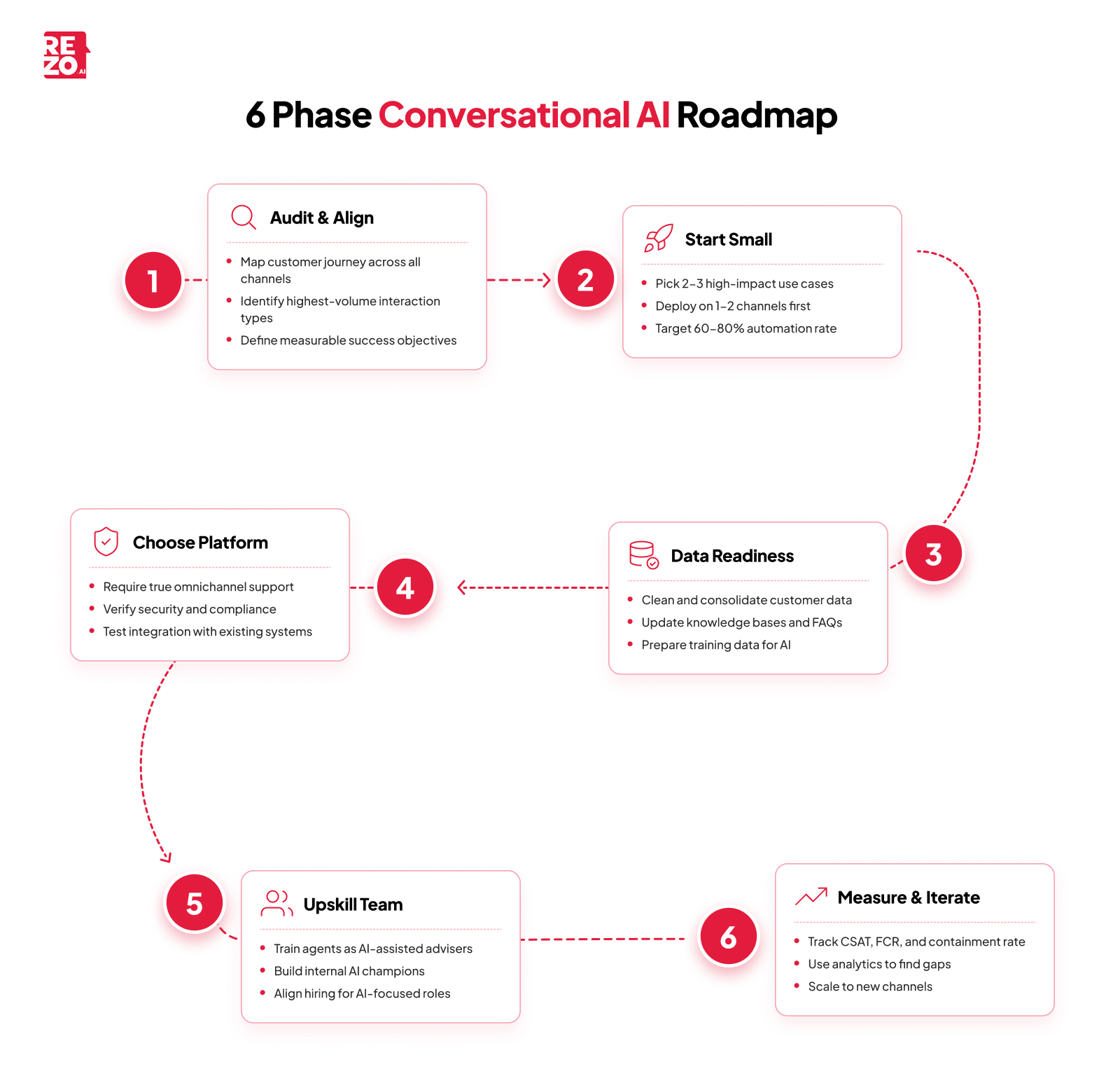
Strategy without execution is just a presentation deck. Implementing conversational AI requires a phased approach that balances ambition with pragmatism and aligns with your specific business needs.
Phase 1: Audit and Align
Map your current customer journey across all communication channels: voice, chat, email, and messaging. Identify the highest-volume, most repetitive customer service tasks and interaction types. Then define clear objectives. What does success look like for your customer service team? Reducing average handle time by 30%? Automating 60% of routine tasks? Improving first-call resolution? Get specific. Vague goals produce vague results.
Build a clear conversational AI strategy by understanding which customer interactions are best suited for automation and which require human agents. Not every customer inquiry needs a person, but some absolutely do.
Phase 2: Start Small, Prove Value
Pick two to three high-impact use cases for your pilot: FAQ deflection, appointment scheduling, order status inquiries, or payment reminders. These routine tasks are high-volume and predictable. Deploy across one or two channels first, then expand. Mid-market companies typically see 60 to 80% of conversation volume automated with the right conversational AI software, but that number comes after iteration, not overnight.
Ensure your pilot includes AI powered chatbots for text channels and voice assistants for call-based customer interactions to test across the full spectrum of business needs.
Phase 3: Invest in Data Readiness
Clean, consolidate, and integrate customer data across CRM, ticketing, and communication platforms. Ensure knowledge bases and FAQs are current and comprehensive. Data quality directly determines AI accuracy. Your conversational AI technology is only as good as the training data it learns from.
Preparing customer data for personalized interactions is equally important. The more context your AI can access, the more effectively it can assist customers and deliver personalized responses on the first attempt.
Phase 4: Choose the Right Platform
Look for a conversational AI platform that offers genuine omnichannel support: voice, chat, and messaging managed from one system, not stitched together from separate tools. Prioritize enterprise-grade security, especially around data residency and GDPR. Evaluate how deeply the conversational AI software integrates with your existing systems. And confirm scalability for volume spikes during peak periods. The right conversational AI tools should match your business needs today while supporting multiple languages and the conversational AI capabilities your customer service team requires.
Phase 5: Upskill Your Team
The agent role is evolving. Train your customer service team to move from script followers to advisers who handle complex customer queries and high-empathy interactions. Build internal champions on your support team who understand the AI and can refine its performance over time. Gartner reports that 42% of organizations expect to hire for AI-focused CX roles by 2026. The talent strategy matters as much as the technology.
Implementing conversational AI is not about replacing your support team. It is about empowering human agents with better AI tools and freeing them from repetitive tasks so they can focus on personalized interactions that enhance customer satisfaction and drive customer engagement.
Phase 6: Measure and Iterate
Track the metrics that matter: customer satisfaction scores, first-call resolution, average handling time, containment rate, and customer effort score. Use conversation analytics from your AI tools to identify gaps and continuously improve responses. Then scale what works to additional communication channels and interaction types.
Implementation is not a one-time event. The organizations that see the highest returns from AI in customer service treat their conversational AI solution as a living system, continuously learning from customer conversations and adapting to changing customer preferences and behavior.
What Does the Future Look Like?
The trajectory for conversational AI for customer service is clear. By 2028, Gartner predicts 30% of Fortune 500 companies will offer service through only a single, AI-enabled channel. Channel consolidation is already underway.
That same year, 70% of customer service journeys are expected to begin and resolve within conversational third-party assistants (Gartner). Customers will not visit your website or call your number. They will ask their AI assistant to handle it.
Perhaps the most fascinating shift: by 2026, 20% of inbound customer service volume will come from machine customers, AI agents acting on behalf of humans (Gartner). Businesses will need conversational AI technology that talks to other AI, handling customer requests and transactions between machines that understand human language as fluently as people do.
The convergence of generative AI, large language models, and agentic AI will create conversational AI for customer service experiences that feel like natural human conversations, adaptive, proactive, and deeply personalized. Voice assistants will become the default for complex interactions where tone matters, while text-based virtual agents handle transactional customer queries efficiently.
Conversational AI for customer service will also become more predictive. Rather than waiting for customer inquiries, future AI technologies will analyze customer behavior and proactively reach out to resolve issues before they escalate. This shift from reactive to proactive customer service delivers a fundamentally better experience and redefines customer engagement across industries.
And here is the part that matters most: the human agent role will evolve, not disappear. AI handles the volume and the routine tasks. Human agents handle the nuance, the empathy, and the relationship building. When customer service delivers this kind of seamless collaboration between conversational AI and human agents, it creates an exceptional customer experience that drives loyalty.
The Bottom Line
The businesses that will lead in customer service are not simply the ones automating the most. They are the ones building intelligent customer service conversational AI systems where AI and human agents work together seamlessly. The shift from basic chatbots to conversational AI to agentic AI is not a passing trend. It is the new foundation of customer experience.
Successful customer service conversational AI requires the right conversational AI strategy, the right AI technologies, and the right balance between automation and the human touch. Organizations that invest in a conversational AI solution now, with strong machine learning foundations, clean customer data, and a well-trained customer service team, will define the standard for AI in customer service in the years ahead.
Frequently Asked Questions
What is the difference between conversational AI and a chatbot?
Chatbots are a subset of conversational AI. Traditional rule-based AI powered chatbots follow pre-scripted flows using keyword matching. Conversational AI uses machine learning and natural language processing to understand context, detect customer intent, and generate dynamic, personalized responses that improve over time through continuous learning. While basic chatbots struggle with complex queries, a conversational AI solution can understand human language nuances and maintain natural, flowing customer conversations.
What are the risks of using conversational AI in customer service?
Key risks include AI hallucinations producing inaccurate responses, difficulty handling emotionally sensitive customer queries, data privacy concerns with customer data, and loss of trust if customer service interactions lack transparency. Proper guardrails, human escalation paths, and regular model auditing help mitigate these risks. The most reliable approach combines AI in customer service with human agents who can step in when the AI reaches its limits.
How does conversational AI handle multiple languages?
Leading conversational AI software supports multiple languages through multilingual natural language processing models. These systems can detect the language a customer is using, translate human conversations in real time, and respond in the customer's preferred language. For organizations serving global markets, multilingual conversational AI capabilities are essential for delivering a consistent customer experience regardless of region.
Frequently Asked Questions (FAQs)


Take the leap towards innovation with Rezo.ai
Get started now