AI Chatbots in Banking: Benefits, Use Cases and Implementation

AI Chatbots in Banking: Benefits, Use Cases and Implementation
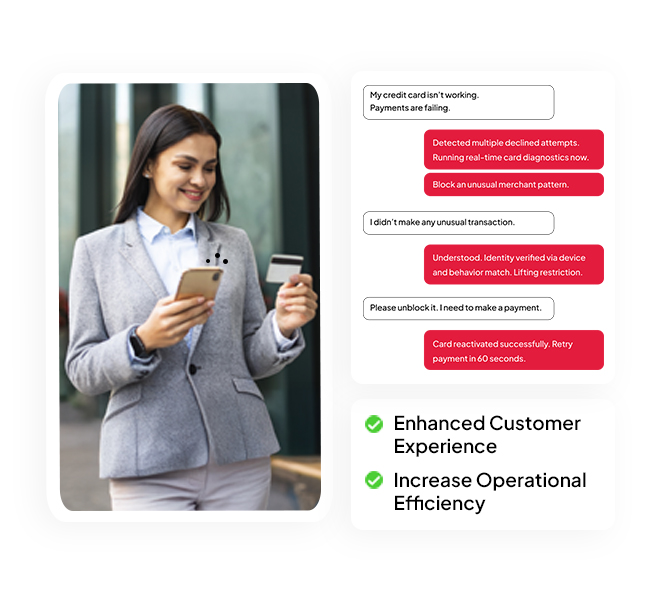


Banking customers today expect instant answers, any time of day, across every channel they use. Whether it is a quick balance check at midnight or help with a loan application during a busy workday, waiting is no longer acceptable. This shift in expectations has made chatbots in banking services not just a nice-to-have but a strategic necessity.
The numbers tell a compelling story. According to recent banking industry research, 92% of North American banks now use AI-powered chatbots for customer service. What started as a cost-cutting experiment has evolved into something far more significant: intelligent virtual assistants that serve as the first point of contact for millions of customers daily.
This guide explores how AI chatbots are transforming banking, the tangible benefits they deliver, how they handle complex customer interactions, integration with existing banking systems, practical use cases, and a roadmap for enterprises looking to provide reliable customer banking experience.
What Are AI Chatbots in Banking?
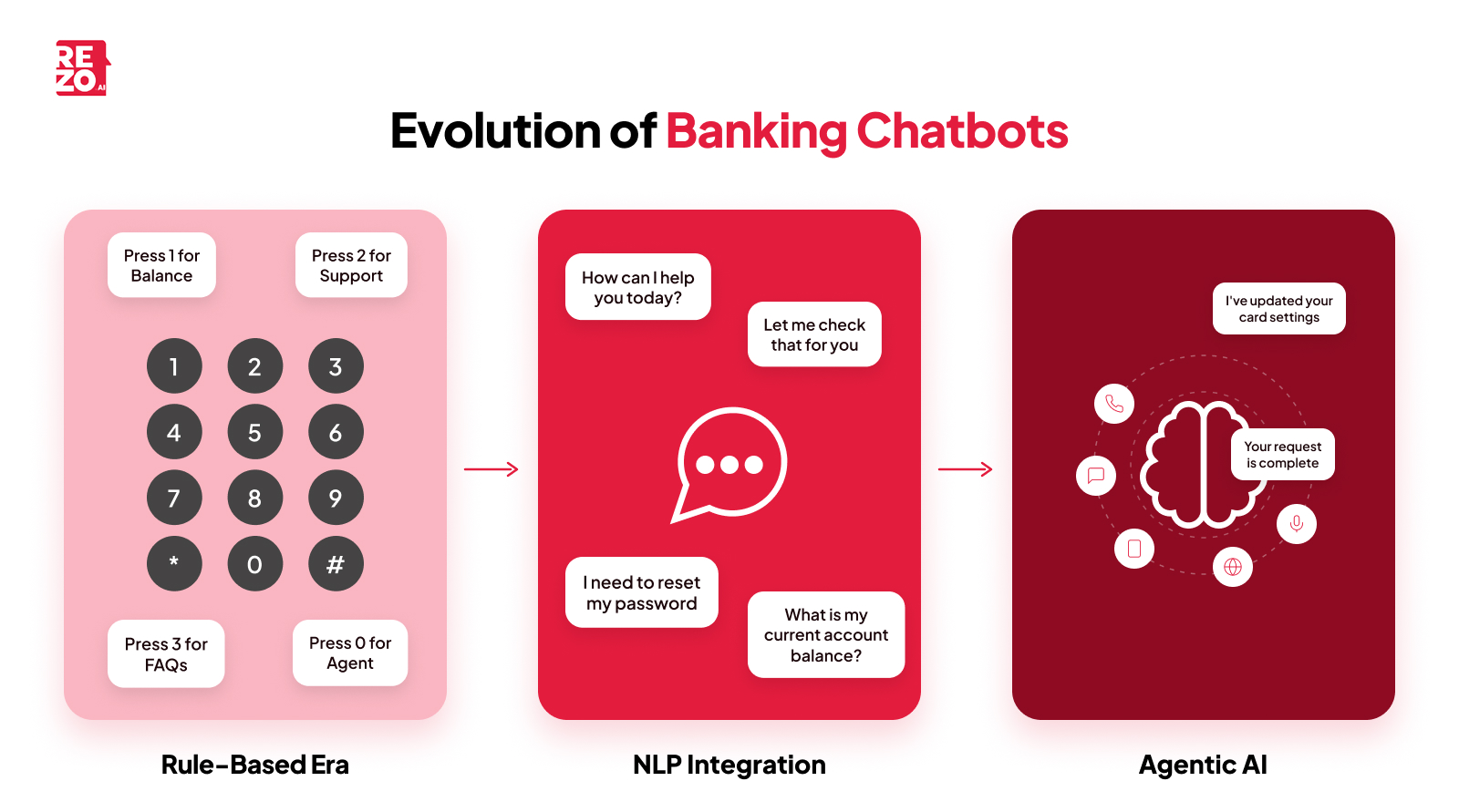
Chatbots in banking are AI-powered virtual assistants designed to interact with customers through natural conversation. Unlike the clunky automated phone menus of the past, modern banking chatbots use natural language processing (NLP) and machine learning to understand customer intent and provide relevant, accurate responses.
These systems have evolved significantly over the past decade, moving away from the traditional banking methods. First-generation chatbots relied on rigid, rule-based scripts that could only handle predefined questions. These could not understand understand customer needs, or execute complex tasks. Today's next gen AI chatbots acts as personal banking assistants. They can understand customer behavior, remember previous interactions, provide personalized financial advice, and handle complex multi-turn conversations and that feel remarkably human.
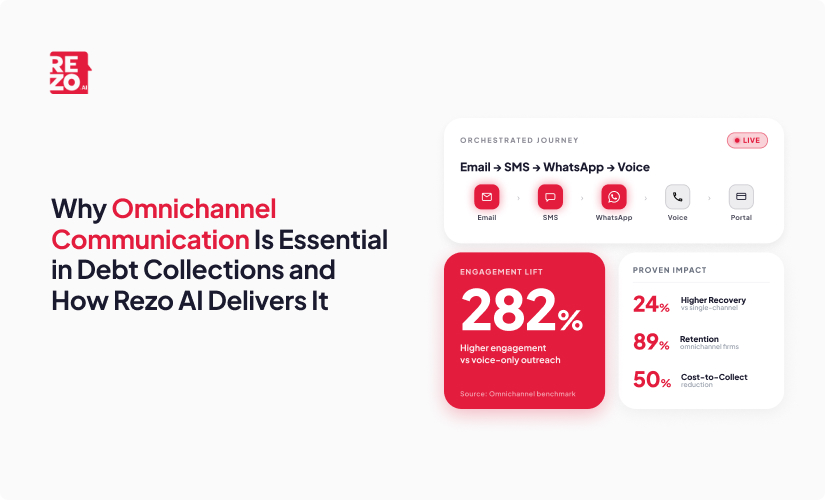
The market reflects this evolution. The chatbot segment in banking, financial services, and insurance (BFSI) is expected to grow from$890 million in 2022 to $6170 million in 2030, projecting a growth rate of 27.4%. This growth is driven by enterprises deploying chatbots across multiple channels including voice, web chat, mobile apps, WhatsApp, and email, creating a truly omnichannel customer experience.
What are the Benefits of Chatbots for Banks?
The business case for chatbots in banking rests on measurable improvements across customer satisfaction and operational efficiency.
Enhanced Customer Experience
Customers no longer need to wait in phone queues or visit branches for routine queries. Chatbots provide instant responses around the clock, eliminating the frustration of business hour limitations. This 24/7 availability is particularly valuable for global banks serving customers across multiple time zones.
Beyond availability, chatbots deliver personalized banking services exceeding customer expectations. By accessing account data and customer's spending habits in real time, they can provide specific information about balances, savings account, recent transactions, payment due dates and other customer inquiries. This personalization extends to proactive service, where chatbots alert customers to unusual activity or upcoming payments before they become problems.
Research shows that banks using chatbots have achieved a 74% first-contact resolution rate, meaning three out of four customer issues are resolved without escalation to a human agent.
Operational Efficiency
The efficiency gains are equally impressive. AI Banking Chatbots now handle 70-85% of inbound queries for retail banks, freeing live customer service agents to focus on complex and time consuming banking tasks that require empathy and judgment. This shift has driven a 32% improvement in customer service productivity across the banking sector utilizing AI chatbots.
The cost differential is stark. A chatbot-handled interaction costs approximately $0.11, compared to $6 for a live agent conversation. Gartner predicts that customer service organizations using AI chatbot technology will achieve a 30% reduction in operational costs. Banks have also reported a 41% drop in ticket backlog rates after implementing chatbot solutions.
Top Use Cases for AI Banking Chatbots
The most successful banking AI chatbots implementations focus on specific, high-value use cases where automation delivers clear benefits for routine banking processes.
Customer-Facing Applications
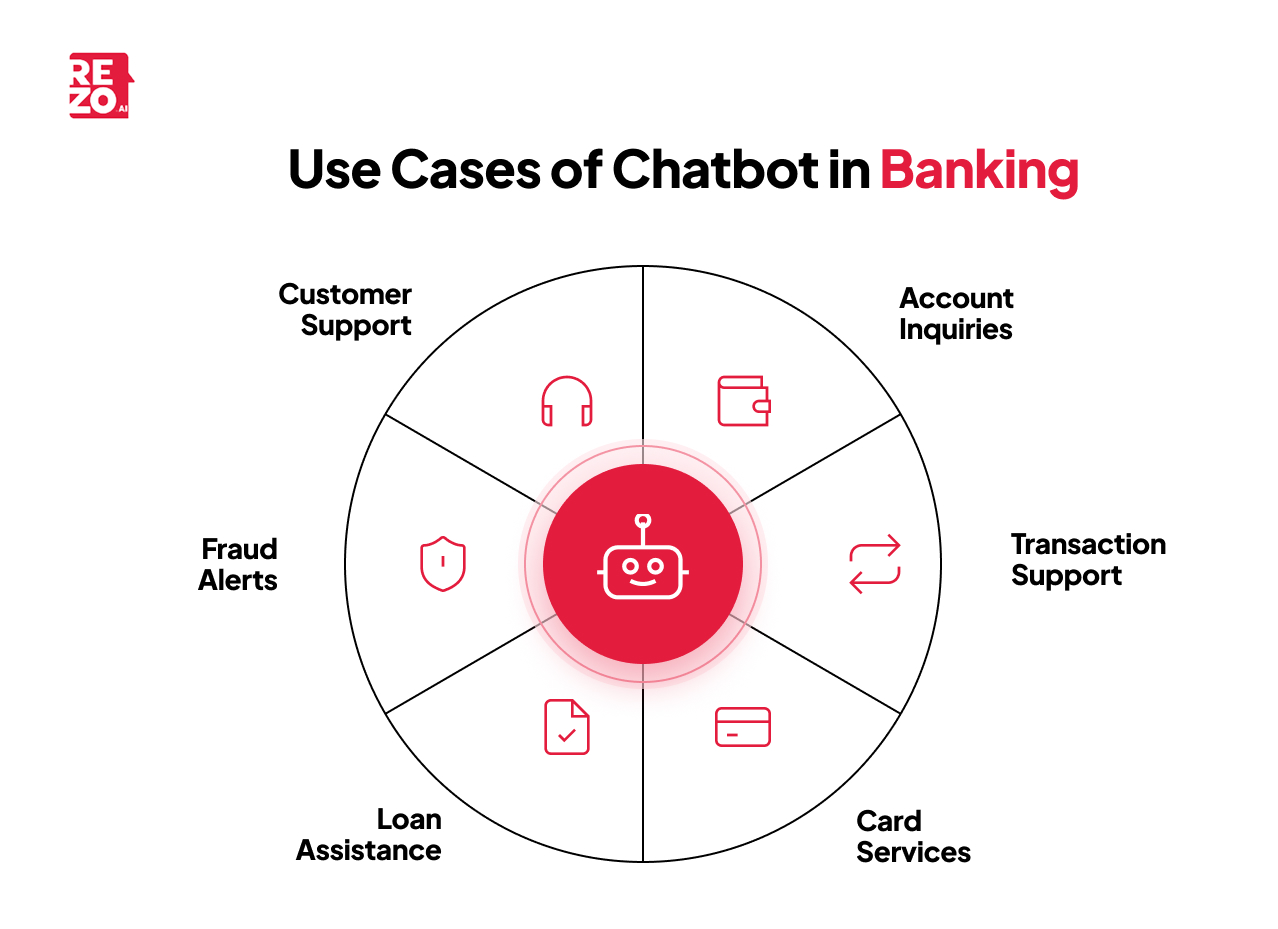
- Account Management: Customers can check balances, view transaction history, and get account statements through simple conversational queries. This represents the highest-volume use case, accounting for over half of all AI chatbot interactions.
- Transaction Support: Modern banking AI chatbots guide users through fund transfers, bill payments, and even international remittances. They can explain fees, confirm recipient details, and provide transaction confirmations.
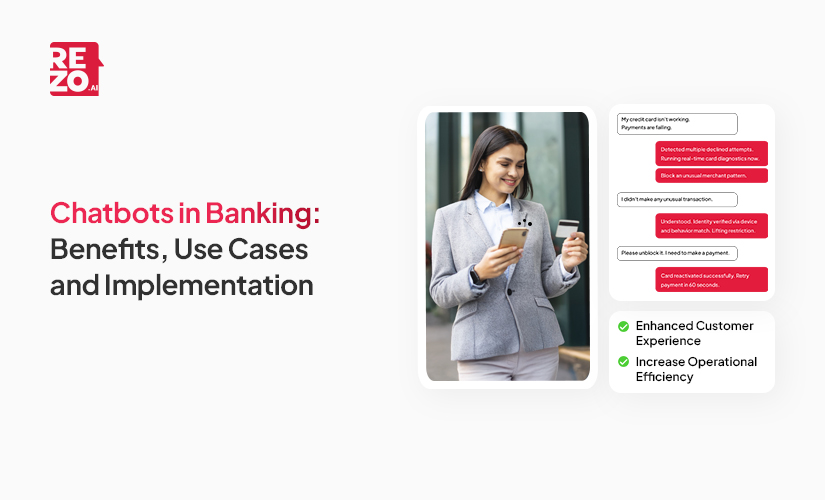
- Card Services: From reporting lost cards to checking reward points, AI chatbots handle the full spectrum of card-related queries. They can instantly block compromised cards and initiate replacement requests, providing peace of mind during stressful situations.
- Loan and Product Assistance: Chatbots help customers check loan eligibility by gathering basic information about income and credit history. They explain product features, compare options, and guide users through application processes.
- Fraud Prevention: By monitoring account activity, AI chatbots can flag suspicious transactions and notify customers in real time. They guide customers through security steps like freezing accounts or changing passwords when threats are detected.
Agent-Assist and Internal Use
AI Chatbots in banking are not limited to customer-facing roles. Progressive banks deploy them internally to support employees and drive business growth.
- Real-Time Agent Support: During live customer calls, chatbots surface relevant information, policy details, and suggested responses, helping agents resolve issues faster.
- Compliance Automation: AI Chatbots assist with regulatory checks and documentation, reducing the compliance burden on frontline staff while ensuring consistent adherence to requirements.
How to Implement AI Chatbots in Banking Industry?
Successful chatbot implementation requires more than technology selection. It demands a strategic approach that considers integration, security, and the human element.
Step 1: Identify High-Value Use Cases
Begin by analyzing your contact center data to identify the most common customer queries and customer requests. Look for high-volume, repetitive interactions that follow predictable patterns. FAQ resolution, guide to pay bills, how to transfer funds and account balance inquiries typically offer the quickest wins.
Prioritize use cases based on three criteria: volume of interactions, complexity of resolution, and customer impact. Starting with simpler use cases allows your team to build confidence and demonstrate value before tackling more complex scenarios.
Step 2: Ensure Seamless Integration
Integration is where many implementations struggle. Industry Research indicates that most banks face difficulty integrating chatbots with legacy core systems. Success requires connecting your chatbot to core banking platforms, CRM systems, fraud detection tools, and knowledge bases.
Real-time data access is essential. A chatbot that cannot retrieve current account information or recent transaction details will frustrate customers rather than help them. Plan for API-based integration that enables bidirectional data flow.
Consider omnichannel deployment from the start. Customers expect consistent experiences whether they engage via web chat, mobile app, WhatsApp, or voice. A unified platform approach prevents fragmented experiences and duplicated development efforts.
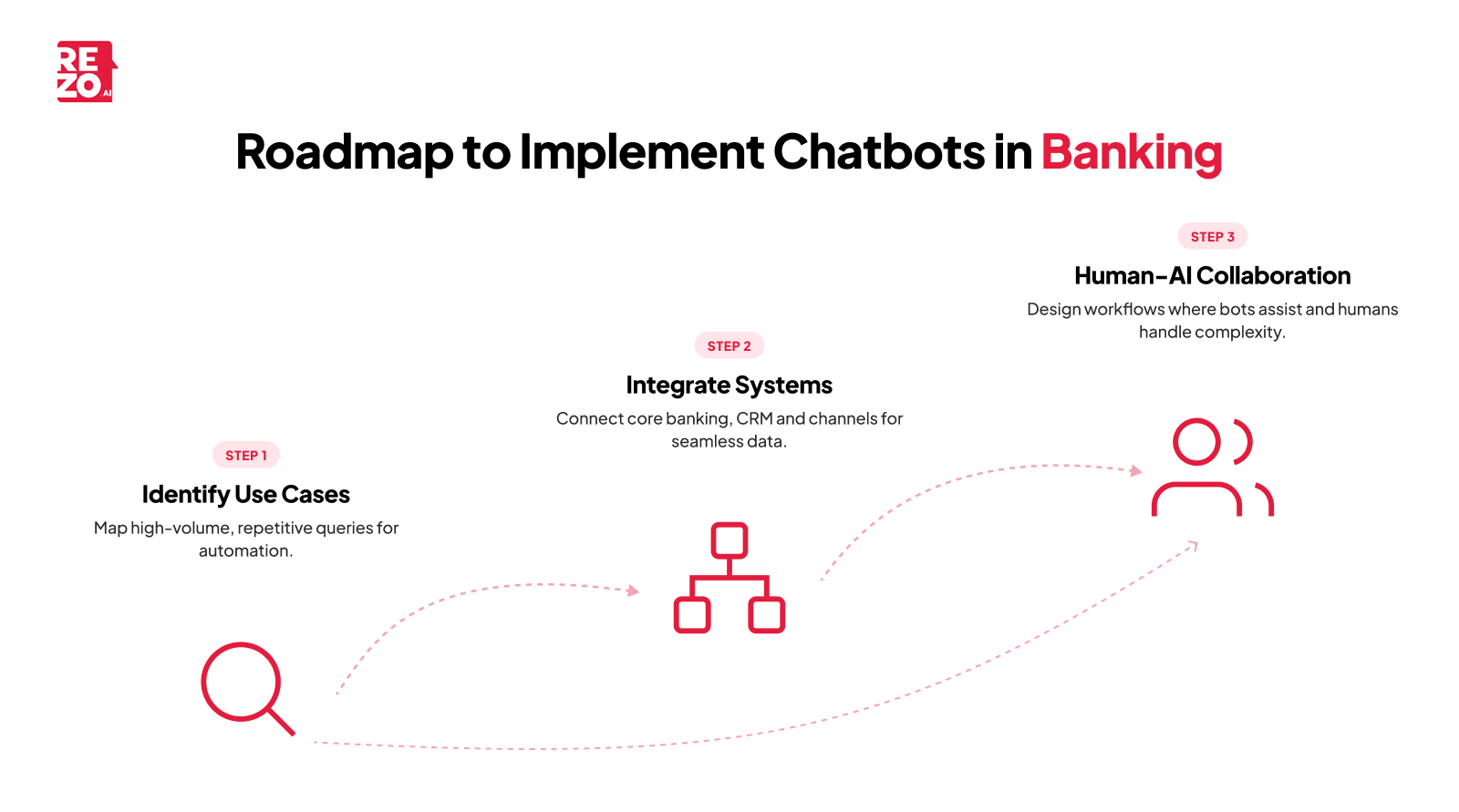
Step 3: Design for Human-AI Collaboration
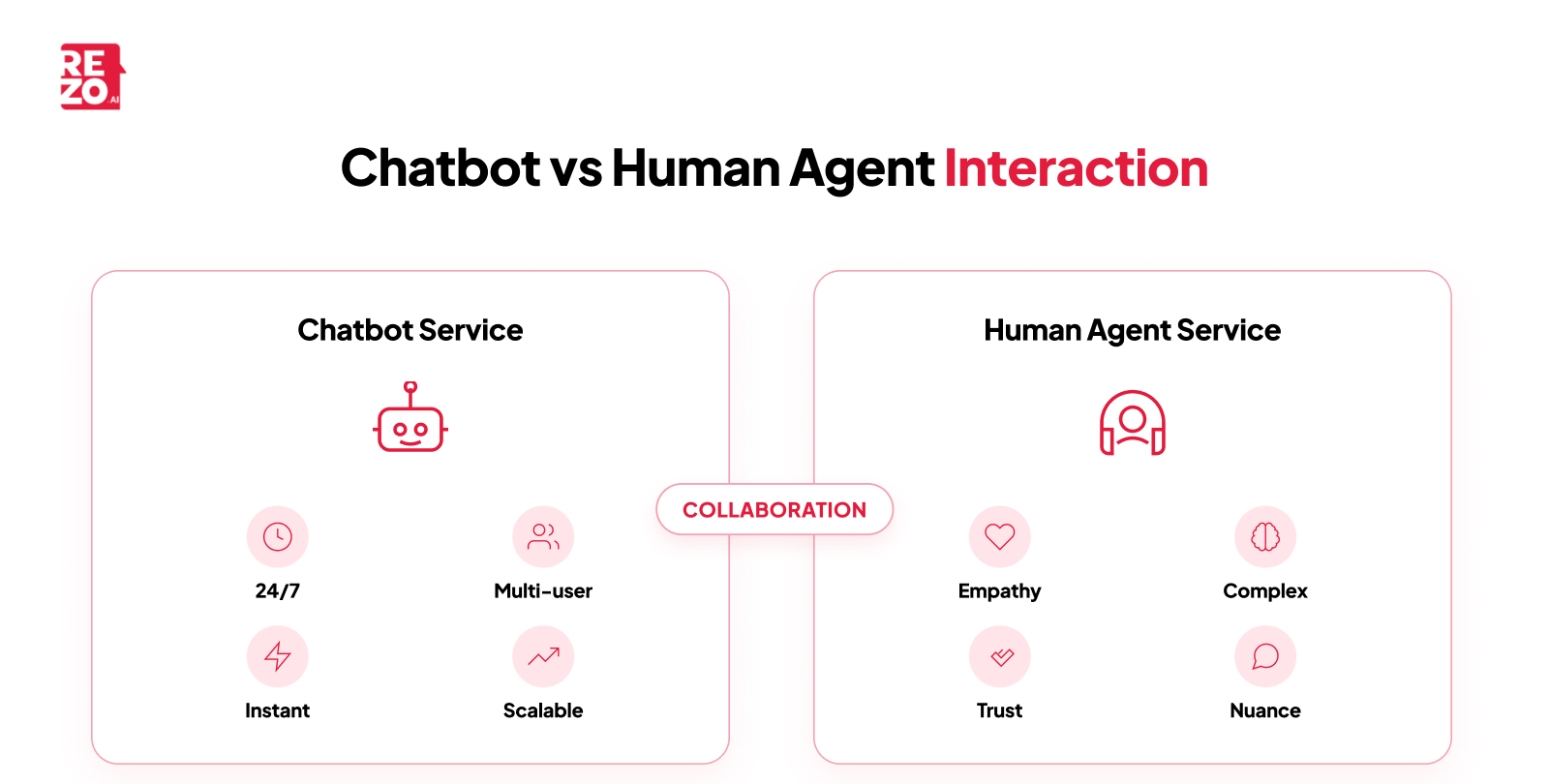
Perhaps the most critical success factor is designing seamless handoffs between chatbots and human agents. Deloitte research reveals that 74% of customers still prefer human agents for routine banking queries, highlighting a significant trust gap.
Address this by creating clear escalation paths. When a chatbot detects customer frustration, encounters queries outside its training, or handles sensitive customer information, it should smoothly transfer the conversation to a human support agent with full context preserved.
The goal is not to replace human agents but to augment their capabilities. Chatbots handle routine queries while humans focus on complex issues requiring judgment, empathy, and relationship building.
What are the Common Challenges in Implementing Banking Chatbots?
Implementing chatbots in banking and financial sector comes with predictable challenges that can be addressed through thoughtful planning.
- Legacy System Integration: Many banks operate on decades-old core systems that were not designed for real-time API access. Consider middleware solutions that bridge legacy systems with modern chatbot platforms without requiring wholesale replacement.
- Building Customer Trust: The trust gap is real. Address it through transparency about when customers are speaking with a bot, quick access to human agents when requested, and consistent accuracy that builds confidence over time.
- Handling Complex Queries: No chatbot handles every scenario perfectly. Invest in robust intent detection and design graceful fallbacks that acknowledge limitations rather than providing incorrect information. Only 36% of banks report having adequate in-house expertise to maintain chatbot AI, making ongoing training and improvement essential.
- Regulatory Compliance: Banking chatbots must comply with all applicable consumer financial laws. Work closely with compliance teams to ensure your chatbot provides accurate disclosures, protects customer data, and maintains appropriate records of interactions.
The Future of Chatbots in Banking
The trajectory of banking chatbots points toward increasingly sophisticated, proactive, and autonomous capabilities.
Large language models (LLMs) and natural language understanding are enhancing conversational quality, enabling chatbots to handle nuanced customer queries and provide more natural, contextual responses boosting customer engagement with personalized services. Voice AI is expanding, with voice-first banking experiences becoming mainstream as customers grow comfortable with conversational interfaces.
The most significant shift may be toward agentic AI, systems that can think, decide, and act autonomously on behalf of customers. Rather than simply answering questions, these systems will proactively identify opportunities, prevent problems, and complete tasks across multiple steps and systems and help with cost savings.
Gartner's prediction that 80% of heritage banks will be unable to compete by 2030 if they do not modernize underscores the urgency. Banks that view AI chatbots as a strategic investment in increasing customer experience rather than a cost-cutting tactic will be best positioned for this future.
Conclusion
Chatbots in banking have moved from experimental to essential. The evidence is clear: they deliver measurable improvements in customer experience, operational efficiency, and cost management. With 98% of retail banks now using chatbots, the question is no longer whether to implement but how to implement effectively.
Success requires a balanced approach. Start with high-value use cases, ensure tight integration with existing systems, and design for seamless human-AI collaboration. Address the trust gap through transparency, accuracy, and easy access to human agents when needed.
For enterprises managing high-volume customer interactions across voice, chat, email, and WhatsApp, the opportunity is significant. The right banking AI platform can transform customer experience while driving efficiency at scale.
The future belongs to banks that treat chatbots not as a technology project but as a core component of their customer experience strategy. The time to act is now.
Frequently Asked Questions
Can banking chatbots handle multiple languages?
Yes, modern banking chatbots support multilingual capabilities using NLP models trained on diverse languages. This enables banks to serve diverse customer bases without deploying separate systems for each language, with real-time translation for seamless conversations.
Are banking chatbots secure enough for financial transactions?
Banking chatbots implement robust security protocols including multi-factor authentication, end-to-end encryption, and biometric verification. They comply with financial regulations like PCI DSS and can detect suspicious activity patterns to protect customer accounts.
How long does it take to implement a banking chatbot?
Implementation timelines vary based on complexity. Basic FAQ chatbots can launch within weeks, while fully integrated conversational AI systems with core banking connections typically require 3 to 6 months for enterprise deployments.
What happens when a chatbot cannot answer a customer's question?
Well-designed chatbots recognize their limitations and seamlessly transfer conversations to human agents with full context preserved. The customer does not need to repeat information, ensuring a smooth handoff experience.
Frequently Asked Questions (FAQs)


Take the leap towards innovation with Rezo.ai
Get started now