AI Voice Bots in Banking: How they are Transforming Customer Experience

AI Voice Bots in Banking: How they are Transforming Customer Experience



Every day, banks handle millions of customer calls. Account balance queries, transaction disputes, loan inquiries, payment reminders. The volume is relentless. For years, customers have navigated frustrating IVR menus, pressing buttons and repeating themselves, only to wait in queue for a human agent.
That era is ending. AI powered voice bots are fundamentally changing how banks interact with customers. These intelligent assistants understand natural speech, process requests in real time, and deliver answers without the friction of traditional phone systems. U.S. banks invested $31.3 billion in AI technologies in 2024 alone, with spending projected to reach $81 billion by 2028 according to Gartner. The shift is not incremental. It is transformational.
This article explores how AI voice bots work, how they are boosting customer satisfaction and what it takes to implement them successfully.
What Are AI Voice Bots and How Do They Work?
AI powered voice bots are intelligent virtual assistants that engage customers through spoken conversation. Unlike traditional IVR systems that force callers through rigid menu trees, voice bots understand natural language and respond contextually, enhancing customer satisfaction.
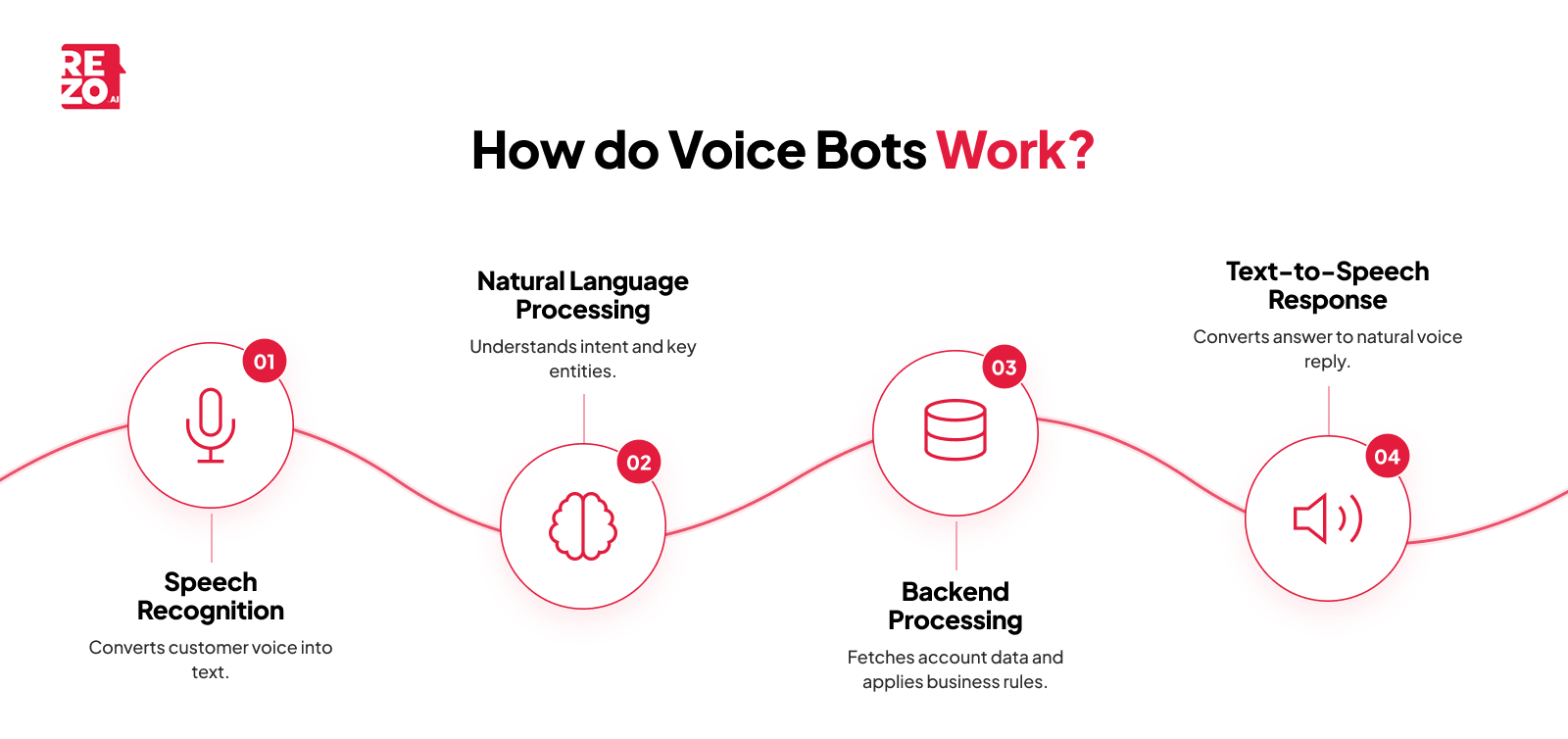
The technology operates through four key stages. First, automatic speech recognition converts the caller's spoken words into text. Next, natural language processing (nlp) analyzes that text to understand intent, what the customer issue is: whether the customer wants to check a balance, report a lost card, or dispute a charge. The AI then determines the appropriate response by connecting to backend systems like core banking platforms and CRMs. Finally, text-to-speech technology delivers the answer back to the customer in natural-sounding voice.
This entire process happens in milliseconds. A customer can simply say "What was my last transaction?" and receive an instant support, with accurate response without navigating menus or waiting on hold.
Why Banks Are Adopting AI Voice Bots?
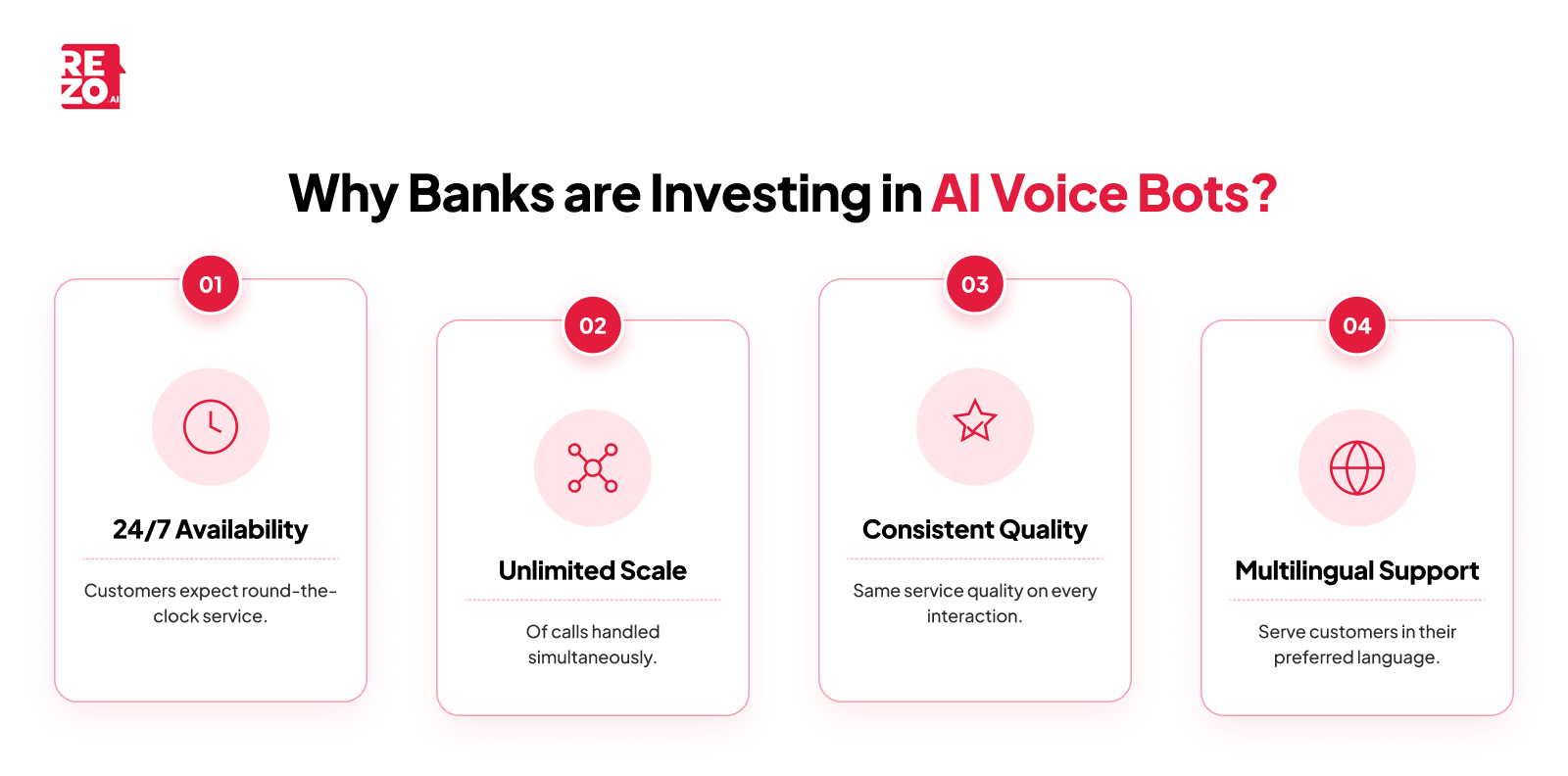
The business case for voice bots in banking is compelling. Customer expectations have shifted dramatically. According to industry research, 75% of customers now expect round-the-clock service availability. Voice bots deliver that without the cost of staffing contact centers 24 hours a day.
Scale is another factor. A single voice bot can handle thousands of simultaneous conversations. When call volumes spike during market volatility or product launches, voice bots absorb the surge without dropping calls or extending wait times.
Consistency matters too. Human agents have good days and bad days. Voice bots deliver the same quality of service on every interaction, every time. They never forget a compliance script or miss a disclosure requirement.
For banks serving a global audience, multilingual support is essential. AI powered Voice bots can switch between languages seamlessly, serving customers in their preferred language without requiring specialized support teams for each.
Perhaps most importantly, AI voice technology free human agents to focus on complex, high-value interactions. Rather than answering routine balance inquiries, agents can spend their time on relationship building, problem solving, and revenue-generating conversations. This boosts agent productivity, freeing them off routine tasks. Gartner predicts that by 2029, agentic AI will autonomously resolve 80% of common customer service issues without human intervention.
Key Use Cases for Voice Bots in Banking
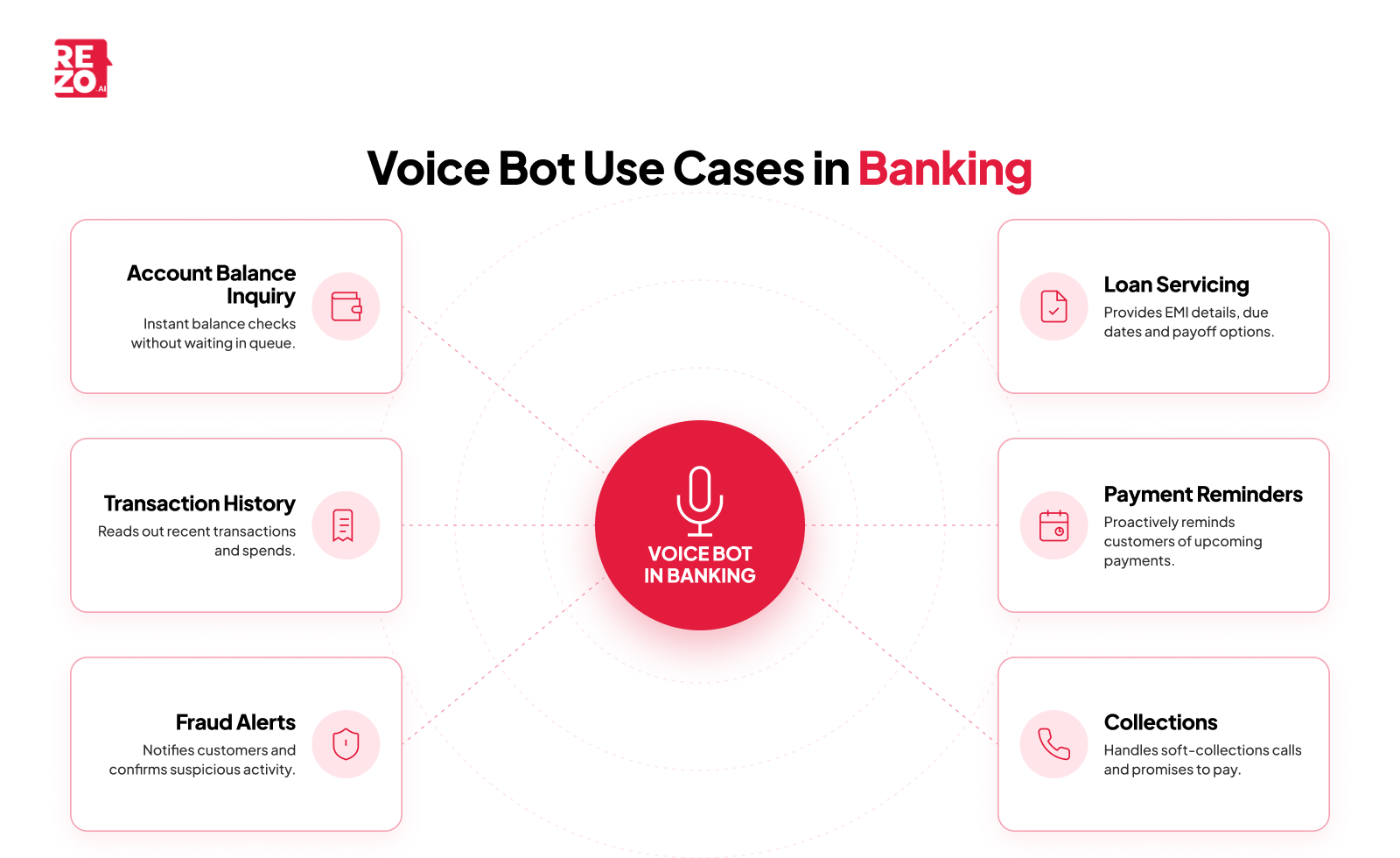
AI voice bots excel across a wide range of banking operations, propelling customer engagement. The most common applications include account inquiries, transaction history, fraud alerts, loan servicing, and collections. It can also handle complex queries like outbound campaigns, provide proactive support, and drive revenue growth.
For account management, customers can check balances, review recent transactions, and receive spending insights through simple voice commands. The AI voice bot connects securely to core banking systems, retrieves the relevant data, and delivers it conversationally.
Customer Service and Support
Voice AI Agents can automate routine tasks that previously consumed agent time. Balance inquiries, transaction lookups, branch and ATM locations, account status updates. These high-volume, low-complexity interactions are ideal for automation.
Beyond basic queries, voice bots assist with account management tasks like updating contact information, setting up alerts, and activating new cards. They can also provide product information, walking customers through features and eligibility requirements for credit cards, loans, or investment products.
Collections and Payment Recovery
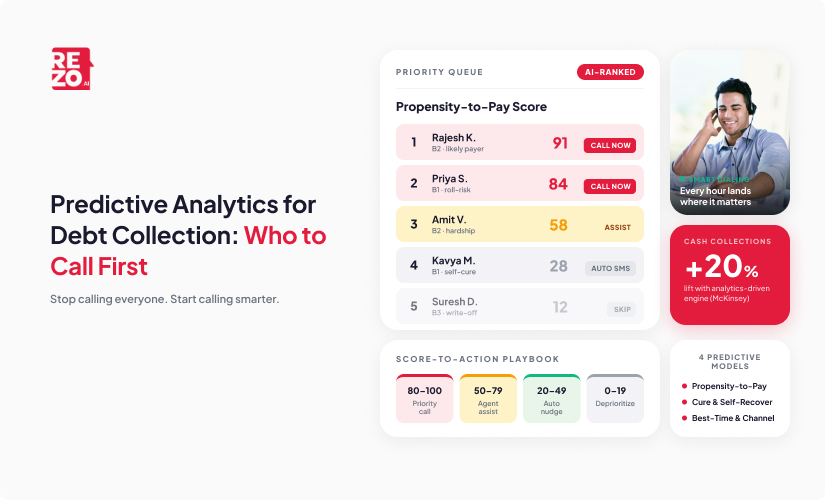
One of the most impactful use cases is in collections. Traditional collection calls suffer from low connect rates as customers screen unfamiliar numbers. AI voice agents achieve significantly higher connect rates because they can call at optimal times, adapt their approach based on customer responses, and handle high volumes efficiently.
Voice bots can deliver payment reminders, discuss payment arrangement options, and process payments directly. They maintain compliance with regulations while still engaging customers in natural conversation. For banks and financial institutions, this translates to improved recovery rates and reduced collection costs.
How to Implement AI Voice Bots in Banking?
Successful Voice AI Agents implementation requires thoughtful planning, execution and a seamless integration. The banks achieving the best results follow several key principles.
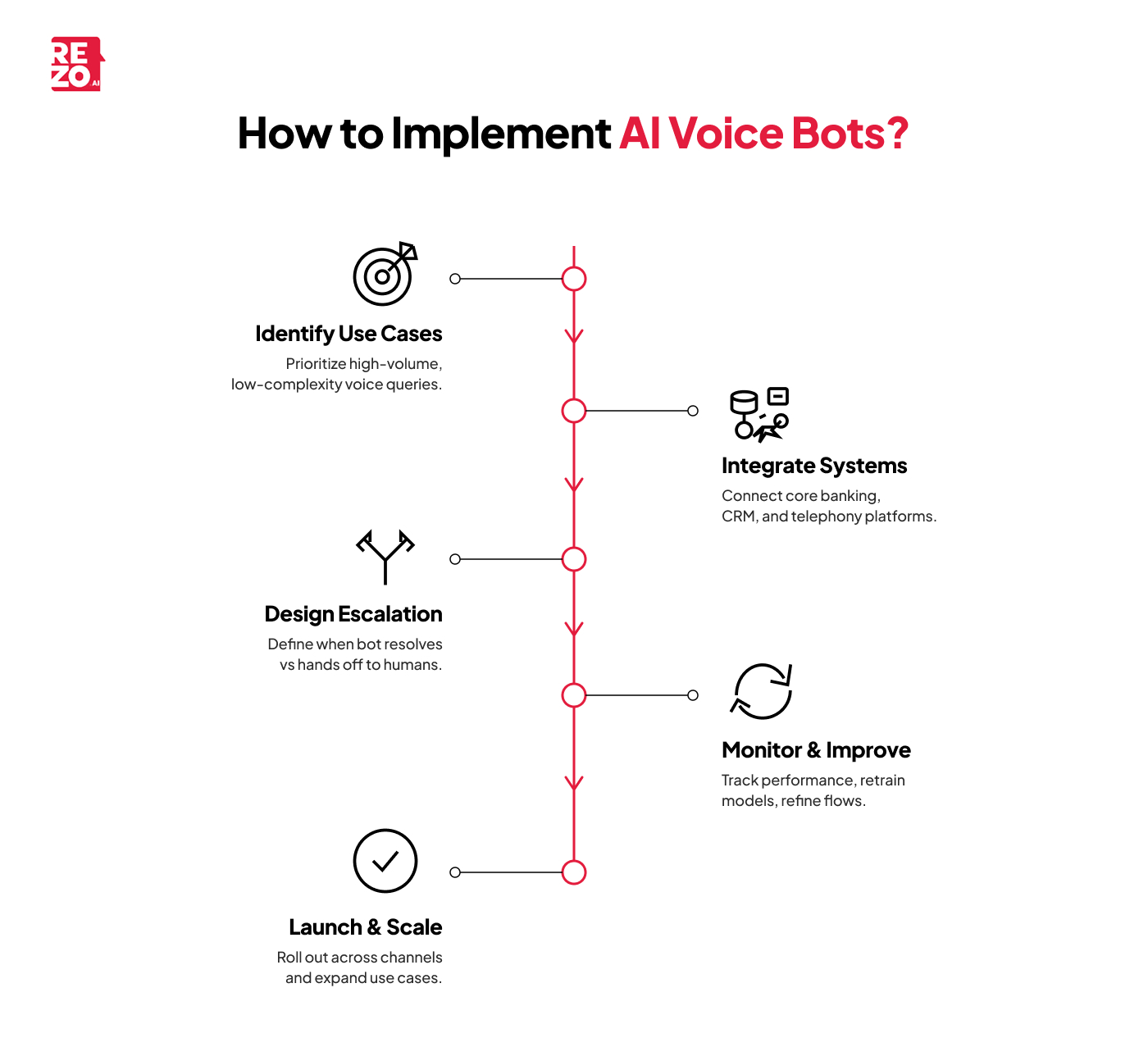
Start with high-volume, routine use cases. Balance inquiries, transaction lookups, and payment reminders are ideal starting points because they are frequent, low-risk and customer intent is well defined. Early wins build organizational confidence and generate data for improving the system.
Integration is critical. Voice bots must connect seamlessly with core banking systems, CRMs, and existing contact center infrastructure. Middleware solutions can bridge legacy systems without requiring complete technology overhauls. Banks implementing voice AI across front-end and back-end operations, have reported an increase in efficiency and cost savings.
Design clear escalation paths. Voice bots should recognize when a query exceeds their capabilities and transfer to human agents smoothly. The handoff must include full context so customers do not need to repeat themselves. This personalized assistance boosts customer trust in the bank.
Integration with Existing Infrastructure
Most banks operate complex technology environments with systems accumulated over decades. Modern voice AI platforms use API-based architectures and middleware layers to integrate without disrupting existing operations.
The key is omnichannel deployment. Voice bots should connect across IVR systems, mobile apps, WhatsApp, and smart devices, creating consistent experiences and instant responses regardless of how customers choose to engage. This unified approach ensures that a conversation started on one channel can continue seamlessly on another.
Security cannot be an afterthought. Implement encryption, biometric authentication, and real-time fraud detection from the start. Voice bots handling financial transactions must meet PCI-DSS requirements and regional data protection regulations.
What are the Challenges in Implementing Voice Bots in Banks?
Deploying voice bots in banking comes with challenges that require deliberate attention.
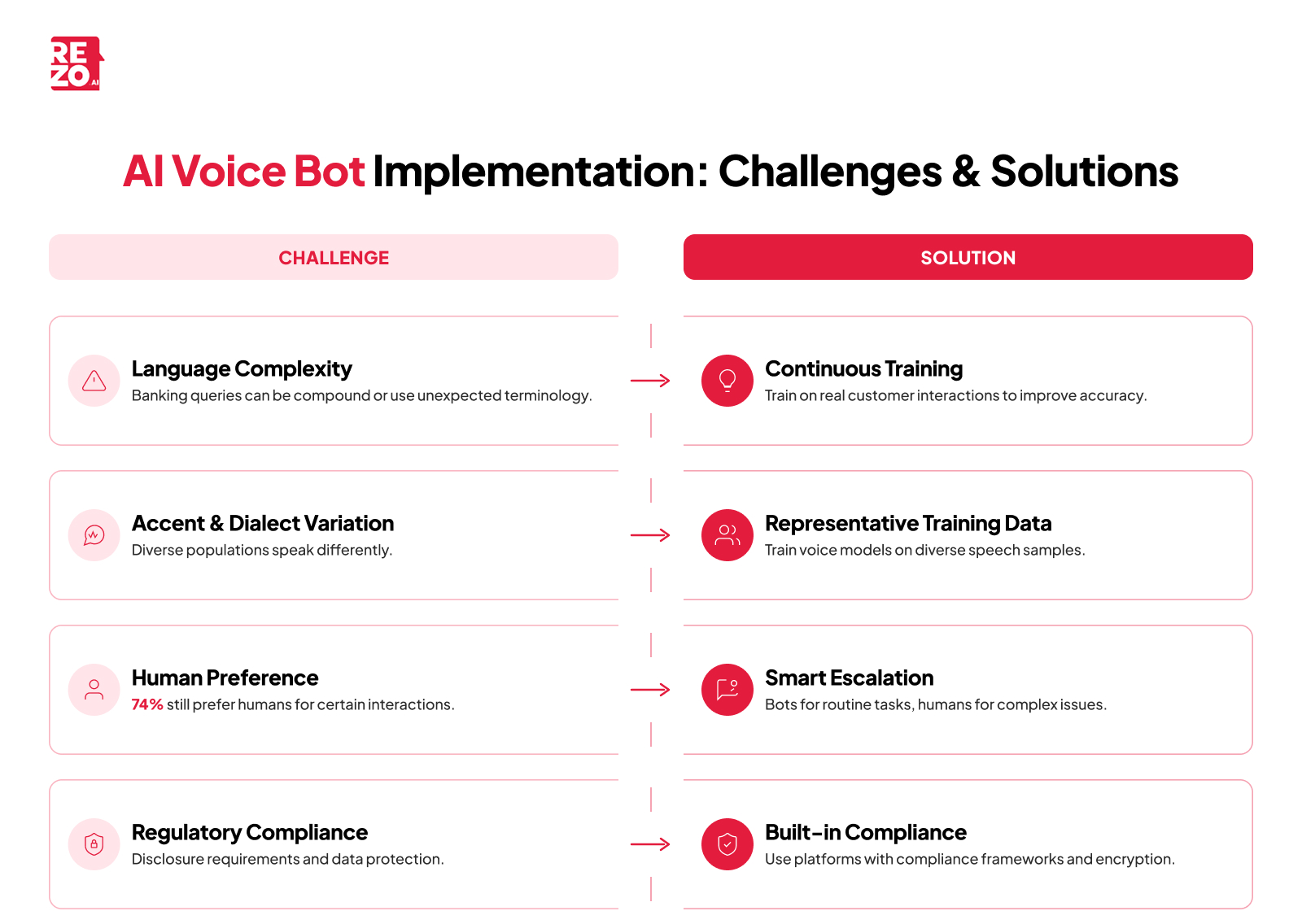
Language understanding remains an ongoing refinement. While natural language processing and machine learning algorithm has advanced dramatically, banking queries can be complex. Customers may ask compound questions or use terminology differently than expected. AI Voice assistants need continuous training on real customer interactions improves accuracy over time.
Accents and regional speech patterns present another consideration. Banks serving diverse populations must train their voice models on representative speech samples to ensure consistent recognition across customer demographics.
Deloitte research found that 74% of customers still prefer human agents for certain interactions. The goal is not to eliminate human contact but to deploy voice bots where they add value while preserving human touchpoints for complex or emotionally sensitive situations.
Regulatory compliance requires careful design. Voice bots must follow disclosure requirements, record interactions appropriately, and protect customer data. Working with platforms that have built-in compliance frameworks reduces risk.
The Future of Voice AI in Banking
The capabilities of voice AI are advancing rapidly. The next generation of voice bots will not simply provide instant answers but will act as autonomous agents capable of handling complete customer journeys, with increased operational efficiency.
Voice channel biometrics will become standard for authentication, eliminating passwords and PINs in favor of secure, frictionless identity verification. Customers will simply speak, and the system will know who they are.
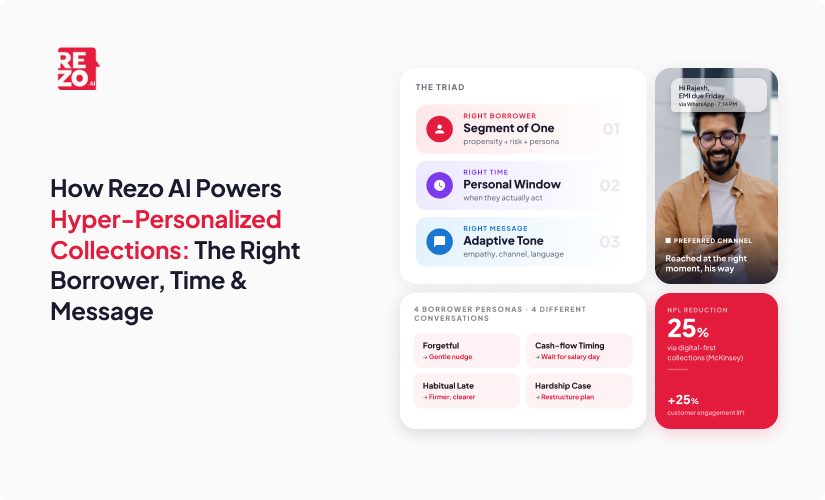
Hyper-personalization will transform interactions. Voice bots will understand customer context, anticipate needs, and proactively offer relevant solutions. McKinsey estimates that generative AI could add between $2.6 trillion and $4.4 trillion annually to the banking sector through enhanced customer loyalty driven by personalization.
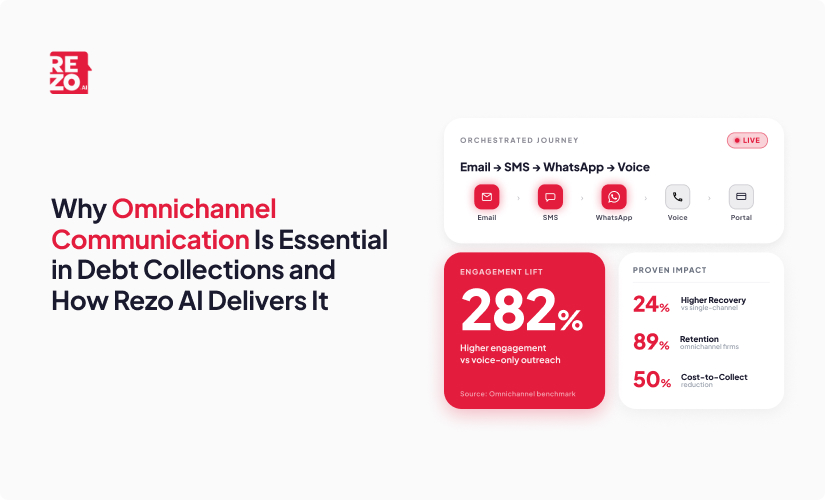
The convergence of channels is accelerating. Leading platforms now orchestrate customer interactions seamlessly across voice calls, chat, email, and WhatsApp within unified systems. This integrated approach ensures consistent experiences and enables conversations to flow naturally across touchpoints.
Conclusion
AI voice bots have moved from experimental technology to essential infrastructure for banks serious about customer experience. The evidence is clear. Global banks are achieving remarkable results with voice AI, from billions of automated interactions to hundreds of millions in fraud prevention.
The competitive advantage now belongs to institutions that deploy voice bots thoughtfully, starting with high-impact use cases, integrating with existing systems, and continuously improving based on real customer interactions.
The technology is proven. The ROI is documented. The customer expectations are set. The question is not whether to adopt AI voice bots, but how quickly your organization can begin realizing their benefits.
Frequently Asked Questions
What is the difference between a voice bot and a chatbot in banking?
Voice bots process spoken language through phone calls or voice interfaces, using speech recognition and text-to-speech technology. Chatbots handle text-based interactions via web, mobile apps, or messaging platforms. Many modern platforms support both modalities within a unified conversational AI system.
Can AI voice bots handle sensitive banking transactions securely?
Yes, enterprise-grade voice bots incorporate multiple security layers including voice biometrics for authentication, end-to-end encryption, PCI-DSS compliance for payment processing, and real-time fraud detection. Leading implementations like HSBC Voice ID have prevented hundreds of millions in fraud.
How long does it take to deploy an AI voice bot for a bank?
Timeline depends on scope and integration complexity. Basic implementations handling common queries can launch within 2-3 months. Full-scale deployments with deep core banking integration, multiple languages, and advanced use cases typically require 9-12 months for proper testing and refinement.
Frequently Asked Questions (FAQs)


Take the leap towards innovation with Rezo.ai
Get started now